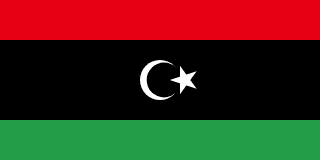
 37 Facts About Libya Most People Get Wrong
Libya is home to 6.9M people across 1,759,541 km², making it one of the most sparsely populated countries on the planet. It ranks 1st in the world for Oil in Africa.
Below are 37 facts about Libya, covering history, geography, economy and culture, including several that regularly surprise people who think they already know the country.
37 Facts About Libya
A complete overview of Libya's history, geography, economy and culture, covering everything from population and borders to language, climate and travel.
Libya has the largest proven oil reserves in Africa.
90% of Libya is covered by the Sahara Desert.
Libya contains some of the best-preserved ancient Roman cities in the world.
The Libyan Desert has one of the highest recorded temperatures on Earth, 58°C at Al Aziziyah in 1922 (later disputed).
Leptis Magna, near Tripoli, is one of the most remarkably preserved Roman cities in the world and the birthplace of Roman Emperor Septimius Severus.
Sabratha, west of Tripoli, has a spectacular Roman theater overlooking the Mediterranean with a three-story stage wall, one of the best preserved in North Africa.
The Akakus Mountains in southwest Libya contain prehistoric rock art depicting hippos, crocodiles, and cattle from when the Sahara was green grassland, a UNESCO World Heritage Site.
Muammar Gaddafi ruled Libya from 1969 to 2011 and was known for his all-female bodyguard unit (the Amazonian Guard) and a political philosophy called the Green Book.
Libya's oil reserves of 48 billion barrels are the largest in Africa and 10th in the world; at peak production in 1970, Libya produced over 3 million barrels per day.
The Great Man-Made River Project is one of the world's largest engineering feats: a network of pipes carrying ancient fossil water from the Sahara to Libya's coastal cities, delivering 6.5 million cubic meters per day.
The ancient Greek city of Cyrene in northeastern Libya was a center of philosophy and medicine; Eratosthenes, who first calculated the circumference of the Earth, was born there.
The Libyan Desert contains the Libyan glass field, a vast scatter of yellow-green glass formed by a meteorite impact 28 million years ago; a piece was found in Tutankhamun's jewelry.
Libya has five UNESCO World Heritage Sites: Leptis Magna, Sabratha, Cyrene, the Akakus rock-art sites, and the old town of Ghadames.
Libya's civil war, sparked by the 2011 Arab Spring, resulted in NATO airstrikes that helped rebels overthrow Gaddafi; he was killed in his hometown of Sirte on October 20, 2011.
Libya has been split between rival governments, one in Tripoli and one in eastern Benghazi, since 2014.
The Senussi religious order was the spiritual backbone of Libyan resistance to Italian colonization (1911-1943) and remains deeply influential in eastern Libya.
Libya's Italian colonial period included use of chemical weapons, concentration camps, and mass deportations, one of the darkest chapters of European colonialism in Africa.
Tobruk in eastern Libya was the site of some of WWII's most intense fighting; Rommel's Afrika Korps and Allied forces fought back and forth across the desert multiple times.
Libya produces virtually no food; only 1.2% of the land is arable and the country imports almost everything it consumes using oil revenues.
The Libyan Sahara contains enormous reserves of fossil water in the Nubian Sandstone Aquifer, rain that fell during the last Green Sahara period over 10,000 years ago.
Libya's Tuareg minority, armed by Gaddafi and cut loose after his fall, became a major destabilizing force across Mali, Niger, and the Sahel after 2011.
Ancient Lepcis Magna was so perfectly buried in sand for centuries that when excavated in the 20th century, much of its marble remained nearly pristine.
The ancient city of Cyrene gave its name to the Cyrenaic philosophical school, which taught that pleasure is the highest good, and was a major center of Hellenistic learning.
Libya has a coastline of 1,770 km along the Mediterranean, the highway of ancient Phoenician, Greek, and Roman civilization before the desert claimed the inland cities.
Libya under Gaddafi had the highest Human Development Index and per capita income in Africa at various points in the 2000s, funded entirely by oil revenues.
The Ghadames Old Town in southwestern Libya, known as the Pearl of the Desert, is a UNESCO-listed ancient Berber city with interconnected rooftop walkways that kept the city cool in the Saharan heat.
Libya is located in North Africa, Africa, with its capital city in Tripoli.
The population of Libya is approximately 6.9M, spread across 1,759,541 km² of territory.
Libya has a population density of 4/km²: one of the most sparsely populated countries on Earth.
Libya has a coastline of 1,770 km, giving it access to maritime trade, fishing and coastal tourism.
Libya shares land borders with 6 countries: Tunisia, Algeria, Niger, Chad, Sudan, Egypt.
The official language of Libya is Arabic.
Libya uses the Libyan Dinar (LYD) as its official currency.
Libya gained independence in 1951, establishing itself as a sovereign nation in North Africa.
The total GDP of Libya is $50.8B, with a GDP per capita of $7,362, classifying it as a lower-middle-income economy.
Libya has a hot desert, mild mediterranean coast climate, with the best time to visit being October–April.
Libya is considered a Budget destination for travellers, with meals averaging $3–7.
Libya is home to Leptis Magna, arguably the best-preserved Roman city in the world, largely because centuries of sand buried and protected it. It was once one of the most important cities in the Roman Empire.
🏆 Libya World Rankings
Libya holds several notable world rankings; here is how it compares globally:
Famous Places in Libya
Libya is home to several remarkable landmarks and destinations that draw visitors from around the world:
🏛️ Leptis Magna
UNESCO ancient Roman city, one of the best-preserved in the world, buried by sand for centuries
🏺 Sabratha
UNESCO Roman theatre on the Mediterranean coast, remarkably intact 3rd-century stage
🕌 Ghadames Old Town
UNESCO desert oasis city, a labyrinth of covered streets and traditional Berber architecture
🏛️ Cyrene
UNESCO ancient Greek city founded in 631 BC, temples, necropolis and stunning clifftop setting
Frequently Asked Questions About Libya
What is Libya famous for?
Libya is home to Leptis Magna, arguably the best-preserved Roman city in the world, largely because centuries of sand buried and protected it. It was once one of the most important cities in the Roman Empire.
What is the capital of Libya?
The capital of Libya is Tripoli.
What is the population of Libya?
The population estimate for Libya is approximately 6.9M.
What language do they speak in Libya?
The official language of Libya is Arabic.
When did Libya become an independent country?
Libya gained independence in 1951.
What currency does Libya use?
Libya uses the Libyan Dinar (LYD).
What is the GDP of Libya?
Libya has a GDP of $50.8B, with a GDP per capita of $7,362.
Where is Libya located?
Libya is located in North Africa, Africa.
Is Libya safe to visit?
Safety conditions in Libya vary by region. Always check your government's official travel advisory before visiting.
What are some fun facts about Libya?
Libya has the largest proven oil reserves in Africa. 90% of Libya is covered by the Sahara Desert. Libya contains some of the best-preserved ancient Roman cities in the world.
What are some interesting facts about Libya?
90% of Libya is covered by the Sahara Desert. Libya contains some of the best-preserved ancient Roman cities in the world. The Libyan Desert has one of the highest recorded temperatures on Earth, 58°C at Al Aziziyah in 1922 (later disputed).
Libya facts: what should I know?
Libya is a country in North Africa with a population of 6.9M. Its capital is Tripoli and its official language is Arabic. Libya has the largest proven oil reserves in Africa.
Explore More About Libya
Want to explore another country? Generate a random country and discover somewhere new.