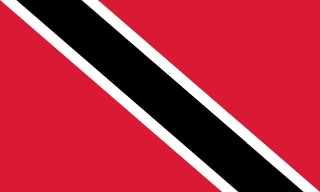
 37 Facts About Trinidad and Tobago Most People Get Wrong
Trinidad and Tobago is home to 1.4M people across 5,131 km², making it more densely populated than most of its neighbours. It ranks 1st in the world for Steelpan.
Below are 37 facts about Trinidad and Tobago, covering history, geography, economy and culture, including several that regularly surprise people who think they already know the country.
37 Facts About Trinidad and Tobago
A complete overview of Trinidad and Tobago's history, geography, economy and culture, covering everything from population and borders to language, climate and travel.
Trinidad is the birthplace of steelpan, the only acoustic instrument invented in the 20th century.
Trinidad Carnival is one of the world's greatest street festivals, origin of many Caribbean carnivals.
Trinidad has the largest natural asphalt lake in the world, Pitch Lake, 75m deep.
Tobago's Buccoo Reef is one of the most biodiverse coral reefs in the Caribbean.
Trinidad and Tobago was the first Caribbean nation with a petroleum-based economy; oil was discovered there in 1857, one of the earliest oil discoveries in the world.
Trinidad is the birthplace of calypso music and soca, which spread across the entire Caribbean.
The Asa Wright Nature Centre in Trinidad's Northern Range is one of the finest birding lodges in the Western Hemisphere.
Trinidad has over 470 bird species, more per square kilometer than almost any country in the Americas.
Trinidad's Caroni Bird Sanctuary is the nesting ground of the scarlet ibis, the national bird; thousands return to roost at dusk in a spectacle visible from boats.
Pitch Lake in La Brea, Trinidad, was used by Sir Walter Raleigh in 1595 to caulk his ships; the material was later used to pave roads in New York City.
Trinidad and Tobago is one of the wealthiest countries in the Caribbean, with a per capita income comparable to some European nations, driven by oil and gas.
Eric Williams, who led independence in 1962, was an Oxford-educated historian whose book Capitalism and Slavery is one of the most influential works in Caribbean history.
Trinidad hosts the largest Hindu temple outside of India, the Dattatreya Temple in Carapichaima, reflecting the large Indo-Trinidadian community.
The Indo-Trinidadian community, descendants of Indian indentured laborers brought between 1845 and 1917, comprises about 35% of the population.
Tobago's Main Ridge Forest Reserve, established in 1776, is the oldest protected rainforest reserve in the Western Hemisphere.
V.S. Naipaul, who won the Nobel Prize in Literature in 2001, was Trinidadian, making it one of the smallest countries per capita to produce a Nobel laureate.
Trinidad and Tobago's offshore natural gas reserves are so large that the country exports LNG to markets as far as Europe and Asia.
The Trinidad and Tobago steelband competition called Panorama is one of the most fiercely contested musical competitions in the world, held annually at Carnival.
Tobago's Pigeon Point and Englishman's Bay are consistently ranked among the finest beaches in the Caribbean.
Trinidad Carnival's J'Ouvert celebration begins at 4am with participants covered in paint, mud, and grease, rooted in the emancipation celebrations of formerly enslaved Africans.
Trinidad's leatherback sea turtles nest on Grande Riviere Beach in numbers among the highest on Earth; hundreds of turtles come ashore in a single night.
CLR James, Trinidadian intellectual and author of Beyond a Boundary, is considered one of the finest cricket writers and political thinkers of the 20th century.
The Lopinot Complex in Trinidad is a historic estate established by French Royalist refugees who fled the Haitian Revolution.
Trinidad and Tobago has produced world-class sprinters including Ato Boldon, Richard Thompson, and multiple Olympic medal winners.
Trinidad's Maracas Bay is famous for its bake-and-shark street food, a fried shark sandwich considered the country's most iconic dish.
The steelpan was created in the 1930s by Trinidadian musicians who discovered that oil drums could be tuned to play melodies, turning industrial waste into one of the most joyful sounds in the world.
Trinidad and Tobago is located in Caribbean, North America, with its capital city in Port of Spain.
The population of Trinidad and Tobago is approximately 1.4M, spread across 5,131 km² of territory.
Trinidad and Tobago has a population density of 273/km²: one of the more densely populated countries in the region.
Trinidad and Tobago has a coastline of 362 km, giving it access to maritime trade, fishing and coastal tourism.
Trinidad and Tobago is an island nation with no land borders, surrounded entirely by water.
The official language of Trinidad and Tobago is English, making it straightforward for international visitors to communicate.
Trinidad and Tobago uses the Trinidad and Tobago Dollar (TTD) as its official currency.
Trinidad and Tobago gained independence in 1962, establishing itself as a sovereign nation in Caribbean.
The total GDP of Trinidad and Tobago is $24.2B, with a GDP per capita of $17,286, classifying it as a upper-middle-income economy.
Trinidad and Tobago has a tropical, dry season january–may climate, with the best time to visit being January–May.
Trinidad and Tobago is considered a Mid destination for travellers, with meals averaging $6–14.
Trinidad is the birthplace of the steelpan, the only acoustic musical instrument invented in the 20th century, made from oil drums by Afro-Trinidadian musicians. Trinidad Carnival is one of the world's greatest festivals, inspiring carnivals across the Caribbean.
🏆 Trinidad and Tobago World Rankings
Trinidad and Tobago holds several notable world rankings; here is how it compares globally:
Famous Places in Trinidad and Tobago
Trinidad and Tobago is home to several remarkable landmarks and destinations that draw visitors from around the world:
🖤 Pitch Lake
World's largest natural asphalt lake, 75m deep and still used commercially today
🦜 Asa Wright Nature Centre
A world-famous birding destination in a former cocoa estate, 400+ species recorded
🏖️ Maracas Beach
Trinidad's most famous beach, dramatic mountains, surf and the legendary shark and bake
🐠 Buccoo Reef, Tobago
A shallow coral reef accessible by glass-bottom boat, one of the Caribbean's most diverse
Frequently Asked Questions About Trinidad and Tobago
What is Trinidad and Tobago famous for?
Trinidad is the birthplace of the steelpan, the only acoustic musical instrument invented in the 20th century, made from oil drums by Afro-Trinidadian musicians. Trinidad Carnival is one of the world's greatest festivals, inspiring carnivals across the Caribbean.
What is the capital of Trinidad and Tobago?
The capital of Trinidad and Tobago is Port of Spain.
What is the population of Trinidad and Tobago?
The population estimate for Trinidad and Tobago is approximately 1.4M.
What language do they speak in Trinidad and Tobago?
The official language of Trinidad and Tobago is English.
When did Trinidad and Tobago become an independent country?
Trinidad and Tobago gained independence in 1962.
What currency does Trinidad and Tobago use?
Trinidad and Tobago uses the Trinidad and Tobago Dollar (TTD).
What is the GDP of Trinidad and Tobago?
Trinidad and Tobago has a GDP of $24.2B, with a GDP per capita of $17,286.
Where is Trinidad and Tobago located?
Trinidad and Tobago is located in Caribbean, North America.
Is Trinidad and Tobago safe to visit?
Safety conditions in Trinidad and Tobago vary by region. Always check your government's official travel advisory before visiting.
What are some fun facts about Trinidad and Tobago?
Trinidad is the birthplace of steelpan, the only acoustic instrument invented in the 20th century. Trinidad Carnival is one of the world's greatest street festivals, origin of many Caribbean carnivals. Trinidad has the largest natural asphalt lake in the world, Pitch Lake, 75m deep.
What are some interesting facts about Trinidad and Tobago?
Trinidad Carnival is one of the world's greatest street festivals, origin of many Caribbean carnivals. Trinidad has the largest natural asphalt lake in the world, Pitch Lake, 75m deep. Tobago's Buccoo Reef is one of the most biodiverse coral reefs in the Caribbean.
Trinidad and Tobago facts: what should I know?
Trinidad and Tobago is a country in Caribbean with a population of 1.4M. Its capital is Port of Spain and its official language is English. Trinidad is the birthplace of steelpan, the only acoustic instrument invented in the 20th century.
Explore More About Trinidad and Tobago
Want to explore another country? Generate a random country and discover somewhere new.