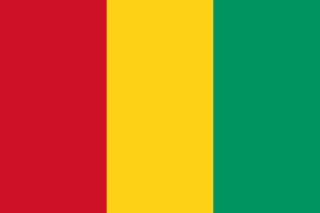
 37 Facts About Guinea Most People Get Wrong
Guinea is home to 13.5M people across 245,857 km², making it a country whose population is spread fairly evenly across its territory. It ranks 1st in the world for Bauxite.
Below are 37 facts about Guinea, covering history, geography, economy and culture, including several that regularly surprise people who think they already know the country.
37 Facts About Guinea
A complete overview of Guinea's history, geography, economy and culture, covering everything from population and borders to language, climate and travel.
Guinea is called the Water Tower of West Africa, the Niger, Senegal and Gambia rivers originate here.
Guinea has the world's largest bauxite reserves, over 40 billion tonnes.
Guinea was the first French colony to vote for full independence in 1958.
The Fouta Djallon highlands are one of West Africa's most spectacular landscapes.
Guinea is the world's largest producer of bauxite, the ore used to make aluminium, accounting for roughly 22% of global production.
The Simandou mountain range contains the world's largest untapped iron ore deposit, estimated at over 2 billion tonnes.
The Bossou chimpanzees in Guinea's forest region have been observed using stone tools for over 40 years, one of the longest-documented records of primate tool use.
Guinea was home to the great Mandinka warrior-king Samory Toure, who resisted French colonial rule for 17 years before his capture in 1898.
The Fouta Djallon plateau was home to one of the largest Islamic theocracies in West Africa, the Futa Jallon Imamate, which controlled the region from the 1720s.
Guinea's music tradition, including the balafon and kora, heavily influenced Cuban son and American jazz through enslaved West Africans.
President Sekou Toure, who led Guinea's independence, famously told Charles de Gaulle: we prefer freedom in poverty to opulence in slavery.
Guinea's coast includes the Los Archipelago, a cluster of islands once used as a holding station in the transatlantic slave trade.
The Nimba Mountains, straddling Guinea, Ivory Coast, and Liberia, are a UNESCO Biosphere Reserve and contain species found nowhere else.
Guinea has a rainy season that dumps over 4,300mm of rain annually on Conakry, making it one of the wettest capital cities in the world.
The 2014-2016 Ebola epidemic began in Guinea's forest region near Gueckédou, making Guinea the origin of the worst Ebola outbreak in history.
The Fria aluminium refinery, opened in 1960, was one of the largest industrial plants in independent Africa at the time.
Traditional Guinean griot oral historians are one of the most sophisticated storytelling institutions in the world, combining law, history, and music.
Guinea's independence in 1958 inspired a cascade of decolonization: within two years, 14 more French-African territories became independent nations.
The Nimba toads found in the Nimba Mountains of Guinea are among the rarest amphibians in the world, giving birth to live young instead of laying eggs.
Guinea is one of only three countries where all four major West African rivers originate, giving it outsized strategic importance for the region's water supply.
Guinea's traditional wrestling (lutte traditionnelle) is practiced at regional festivals with champions achieving celebrity status.
Conakry's Palais du Peuple hosted West Africa's first international modern African art exhibition in 1959, just one year after independence.
Guinea's Konkouré River has one of the highest hydropower potential yields in West Africa, yet only a fraction has been developed.
Guinean kola nuts were prized across West Africa for centuries as a stimulant, currency, and diplomatic gift long before European contact.
The coastal city of Conakry sits on a narrow peninsula that makes it one of the most geographically constrained capital cities in Africa, with the ocean visible from almost everywhere.
Guinea's Bafing River, a major tributary of the Senegal River, originates in the Fouta Djallon highlands and flows north to supply Senegal's water grid.
Guinea is located in West Africa, Africa, with its capital city in Conakry.
The population of Guinea is approximately 13.5M, spread across 245,857 km² of territory.
Guinea has a population density of 55/km²: a moderate density for its region.
Guinea has a coastline of 320 km, giving it access to maritime trade, fishing and coastal tourism.
Guinea shares land borders with 6 countries: Senegal, Mali, Sierra Leone, Liberia, Guinea-Bissau, Ivory Coast.
The official language of Guinea is French.
Guinea uses the Guinean Franc (GNF) as its official currency.
Guinea gained independence in 1958, establishing itself as a sovereign nation in West Africa.
The total GDP of Guinea is $15.9B, with a GDP per capita of $1,178, classifying it as a developing economy.
Guinea has a tropical, dry season november–april climate, with the best time to visit being November–April.
Guinea is considered a Budget destination for travellers, with meals averaging $2–5.
Guinea is called the Water Tower of West Africa because three of the region's major rivers, the Niger, Senegal and Gambia, all originate in the Fouta Djallon highlands here. The country also holds the world's largest bauxite reserves.
🏆 Guinea World Rankings
Guinea holds several notable world rankings; here is how it compares globally:
Famous Places in Guinea
Guinea is home to several remarkable landmarks and destinations that draw visitors from around the world:
🏔️ Fouta Djallon Highlands
A dramatic highland plateau with waterfalls, deep gorges and traditional Fulani villages
🏔️ Mount Nimba
UNESCO trans-border mountain massif with unique biodiversity, viviparous toads found nowhere else
🏝️ Îles de Los
A beautiful archipelago of palm-fringed islands just off Conakry, pirate hideouts turned beach paradise
💧 Kindia Waterfalls
Spectacular waterfalls in the lush highlands east of Conakry
Frequently Asked Questions About Guinea
What is Guinea famous for?
Guinea is called the Water Tower of West Africa because three of the region's major rivers, the Niger, Senegal and Gambia, all originate in the Fouta Djallon highlands here. The country also holds the world's largest bauxite reserves.
What is the capital of Guinea?
The capital of Guinea is Conakry.
What is the population of Guinea?
The population estimate for Guinea is approximately 13.5M.
What language do they speak in Guinea?
The official language of Guinea is French.
When did Guinea become an independent country?
Guinea gained independence in 1958.
What currency does Guinea use?
Guinea uses the Guinean Franc (GNF).
What is the GDP of Guinea?
Guinea has a GDP of $15.9B, with a GDP per capita of $1,178.
Where is Guinea located?
Guinea is located in West Africa, Africa.
Is Guinea safe to visit?
Safety conditions in Guinea vary by region. Always check your government's official travel advisory before visiting.
What are some fun facts about Guinea?
Guinea is called the Water Tower of West Africa, the Niger, Senegal and Gambia rivers originate here. Guinea has the world's largest bauxite reserves, over 40 billion tonnes. Guinea was the first French colony to vote for full independence in 1958.
What are some interesting facts about Guinea?
Guinea has the world's largest bauxite reserves, over 40 billion tonnes. Guinea was the first French colony to vote for full independence in 1958. The Fouta Djallon highlands are one of West Africa's most spectacular landscapes.
Guinea facts: what should I know?
Guinea is a country in West Africa with a population of 13.5M. Its capital is Conakry and its official language is French. Guinea is called the Water Tower of West Africa, the Niger, Senegal and Gambia rivers originate here.
Explore More About Guinea
Want to explore another country? Generate a random country and discover somewhere new.