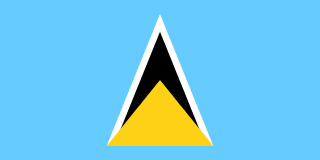
 15 Facts About Saint Lucia Most People Get Wrong
Saint Lucia is home to 184K people across 616 km², making it more densely populated than most of its neighbours. It ranks 1st in the world for Nobel Prizes.
Below are 15 facts about Saint Lucia, covering history, geography, economy and culture, including several that regularly surprise people who think they already know the country.
15 Facts About Saint Lucia
A complete overview of Saint Lucia's history, geography, economy and culture, covering everything from population and borders to language, climate and travel.
Saint Lucia has won the most Nobel Prizes per capita of any country, two laureates for a population of 180,000.
The Pitons, two volcanic spires rising from the sea, are Saint Lucia's iconic landmarks.
Saint Lucia is called the Helen of the West Indies, fought over 14 times by Britain and France.
Saint Lucia produces some of the Caribbean's finest rum and cocoa.
Saint Lucia is located in Caribbean, North America, with its capital city in Castries.
The population of Saint Lucia is approximately 184K, spread across 616 km² of territory.
Saint Lucia has a population density of 299/km²: one of the more densely populated countries in the region.
Saint Lucia has a coastline of 158 km, giving it access to maritime trade, fishing and coastal tourism.
Saint Lucia is an island nation with no land borders, surrounded entirely by water.
The official language of Saint Lucia is English, making it straightforward for international visitors to communicate.
Saint Lucia uses the East Caribbean Dollar (XCD) as its official currency.
Saint Lucia gained independence in 1979, establishing itself as a sovereign nation in Caribbean.
The total GDP of Saint Lucia is $2.2B, with a GDP per capita of $11,957, classifying it as a upper-middle-income economy.
Saint Lucia has a tropical, dry season january–april climate, with the best time to visit being January–April.
Saint Lucia is considered a Mid–Expensive destination for travellers, with meals averaging $10–20.
Saint Lucia has produced more Nobel Prize winners per capita than any other country, two laureates (Derek Walcott in Literature and Sir Arthur Lewis in Economics) from a tiny island of 180,000 people.
🏆 Saint Lucia World Rankings
Saint Lucia holds several notable world rankings; here is how it compares globally:
Famous Places in Saint Lucia
Saint Lucia is home to several remarkable landmarks and destinations that draw visitors from around the world:
🌋 The Pitons
UNESCO twin volcanic spires rising 770m from the Caribbean Sea, Saint Lucia's defining image
♨️ Sulfur Springs
The world's only drive-in volcano, a bubbling pit of sulfurous mud you can bathe in
🏰 Pigeon Island National Park
A historic fort on a causeway with views across the channel to Martinique
🏖️ Anse Chastanet
A stunning volcanic beach framed by the Pitons, world-class snorkelling and diving
Frequently Asked Questions About Saint Lucia
What is Saint Lucia famous for?
Saint Lucia has produced more Nobel Prize winners per capita than any other country, two laureates (Derek Walcott in Literature and Sir Arthur Lewis in Economics) from a tiny island of 180,000 people.
What is the capital of Saint Lucia?
The capital of Saint Lucia is Castries.
What is the population of Saint Lucia?
The population estimate for Saint Lucia is approximately 184K.
What language do they speak in Saint Lucia?
The official language of Saint Lucia is English.
When did Saint Lucia become an independent country?
Saint Lucia gained independence in 1979.
What currency does Saint Lucia use?
Saint Lucia uses the East Caribbean Dollar (XCD).
What is the GDP of Saint Lucia?
Saint Lucia has a GDP of $2.2B, with a GDP per capita of $11,957.
Where is Saint Lucia located?
Saint Lucia is located in Caribbean, North America.
Is Saint Lucia safe to visit?
Safety conditions in Saint Lucia vary by region. Always check your government's official travel advisory before visiting.
What are some fun facts about Saint Lucia?
Saint Lucia has won the most Nobel Prizes per capita of any country, two laureates for a population of 180,000. The Pitons, two volcanic spires rising from the sea, are Saint Lucia's iconic landmarks. Saint Lucia is called the Helen of the West Indies, fought over 14 times by Britain and France.
What are some interesting facts about Saint Lucia?
The Pitons, two volcanic spires rising from the sea, are Saint Lucia's iconic landmarks. Saint Lucia is called the Helen of the West Indies, fought over 14 times by Britain and France. Saint Lucia produces some of the Caribbean's finest rum and cocoa.
Saint Lucia facts: what should I know?
Saint Lucia is a country in Caribbean with a population of 184K. Its capital is Castries and its official language is English. Saint Lucia has won the most Nobel Prizes per capita of any country, two laureates for a population of 180,000.
Explore More About Saint Lucia
Want to explore another country? Generate a random country and discover somewhere new.