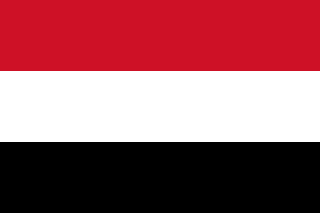
 37 Facts About Yemen Most People Get Wrong
Yemen is home to 33.7M people across 527,968 km², making it a country whose population is spread fairly evenly across its territory. It ranks 1st in the world for Socotra.
Below are 37 facts about Yemen, covering history, geography, economy and culture, including several that regularly surprise people who think they already know the country.
37 Facts About Yemen
A complete overview of Yemen's history, geography, economy and culture, covering everything from population and borders to language, climate and travel.
Socotra Island is so unique it is called the Galápagos of the Indian Ocean, 37% of plants are endemic.
The Dragon Blood Tree of Socotra is one of the most alien-looking plants on Earth.
Sanaa's old city has been continuously inhabited for 2,500 years.
Yemen is the ancestral homeland of coffee, the word mocha comes from the Yemeni port of Mokha.
Shibam, called the Manhattan of the Desert, has 500-year-old mud-brick tower houses up to 9 stories tall, making them the world's oldest skyscrapers.
The ancient Ma'rib Dam, built around 750 BCE, was one of the engineering wonders of the ancient world, capable of irrigating enough farmland to feed up to 50,000 people.
Ancient Yemen was known to Roman geographers as Arabia Felix (Fortunate Arabia) because it controlled the world's entire supply of frankincense and myrrh.
Yemen controls the Bab el-Mandeb Strait, a narrow chokepoint through which roughly 10% of all global seaborne trade passes each year.
The Dragon Blood Tree produces a vivid red resin that has been harvested for over 2,000 years as a medicine, dye and varnish.
Sidr honey from Yemen's Hadhramaut region can sell for over $200 per kilogram and is considered one of the finest and most medically prized honeys on Earth.
Socotra Island has its own distinct language, Socotri, with no traditional writing system, spoken by around 50,000 people and completely unrelated to Arabic.
Old Sana'a contains more than 6,000 tower houses, some reaching 8-9 stories, decorated with white gypsum plasterwork and translucent alabaster windows called qamarias.
Qat, a mild stimulant leaf, is chewed daily by an estimated 70-80% of Yemeni men; its cultivation consumes roughly 40% of Yemen's already scarce groundwater.
The Wadi Hadhramaut is one of the longest continuous wadis in the Arabian Peninsula, stretching over 160 km through the eastern desert.
Yemen's ancient highland terraces date back 3,000 years, making them among the oldest terraced agricultural systems in the world.
The port of Aden was one of the busiest trading hubs in the ancient world; the Arab geographer Al-Muqaddasi called it the gateway between the Mediterranean and China.
Yemen has three UNESCO World Heritage Sites: the Old City of Sana'a, the Old Walled City of Shibam, and the Historic Town of Zabid.
Jabal an-Nabi Shu'ayb, at 3,666 meters, is the highest mountain in the entire Arabian Peninsula.
Ancient South Arabian scripts developed in Yemen around 900 BCE are among the direct ancestors of the modern Arabic alphabet.
The kingdom of Saba, centered in present-day Ma'rib, is most likely the historical homeland of the legendary Queen of Sheba described in the Bible and the Quran.
Yemen's population has nearly tripled since 1990, growing from around 12 million to nearly 34 million, driven by one of the highest birth rates in the Arab world.
Oil was discovered in Yemen only in 1984, and production has already peaked and declined so sharply that the country may have virtually no remaining reserves by the 2030s.
Socotra has over 800 endemic species in total, a greater proportion of unique wildlife than almost any other island on Earth.
Before the civil war, Sana'a's Al-Saleh Mosque was one of the largest mosques in the Arab world, with capacity for 44,000 worshippers beneath six minarets.
The traditional Yemeni curved dagger, the jambiya, is both a cultural symbol and a daily accessory; the style worn signals a man's social status and tribal affiliation.
Yemen shares land borders only with Saudi Arabia and Oman, making it the southernmost country on the Arabian Peninsula.
Yemen is located in Middle East, Asia, with its capital city in Sanaa.
The population of Yemen is approximately 33.7M, spread across 527,968 km² of territory.
Yemen has a population density of 64/km²: a moderate density for its region.
Yemen has a coastline of 1,906 km, giving it access to maritime trade, fishing and coastal tourism.
Yemen shares land borders with 2 countries: Saudi Arabia, Oman.
The official language of Yemen is Arabic.
Yemen uses the Yemeni Rial (YER) as its official currency.
Yemen gained independence in 1990 (unification), establishing itself as a sovereign nation in Middle East.
The total GDP of Yemen is $21.6B (est.), with a GDP per capita of $640 (est.), classifying it as a developing economy.
Yemen has a hot desert, milder highlands climate, with the best time to visit being October–April (before conflict, check current situation).
Yemen is considered a Budget destination for travellers, with meals averaging $2–6.
Yemen's Socotra Island is one of the most biodiverse places on Earth, so isolated that 37% of its plants exist nowhere else, including the extraordinary Dragon Blood Tree with its mushroom-shaped canopy. Yemen is also the birthplace of the global coffee trade.
🏆 Yemen World Rankings
Yemen holds several notable world rankings; here is how it compares globally:
Famous Places in Yemen
Yemen is home to several remarkable landmarks and destinations that draw visitors from around the world:
🌳 Socotra Island
UNESCO the Galápagos of the Indian Ocean, Dragon Blood Trees, white sand beaches and 37% endemic flora
🏛️ Old City of Sanaa
UNESCO ancient city of multi-storey tower houses decorated with geometric patterns, 2,500 years old
🏙️ Shibam (Manhattan of the Desert)
UNESCO city of 500-year-old mud skyscrapers rising from the desert, the world's first high-rise city
🏔️ Al-Mahwit
A breathtaking highland town perched on mountain terraces with ancient fortifications and lush valleys
Frequently Asked Questions About Yemen
What is Yemen famous for?
Yemen's Socotra Island is one of the most biodiverse places on Earth, so isolated that 37% of its plants exist nowhere else, including the extraordinary Dragon Blood Tree with its mushroom-shaped canopy. Yemen is also the birthplace of the global coffee trade.
What is the capital of Yemen?
The capital of Yemen is Sanaa.
What is the population of Yemen?
The population estimate for Yemen is approximately 33.7M.
What language do they speak in Yemen?
The official language of Yemen is Arabic.
When did Yemen become an independent country?
Yemen gained independence in 1990 (unification).
What currency does Yemen use?
Yemen uses the Yemeni Rial (YER).
What is the GDP of Yemen?
Yemen has a GDP of $21.6B (est.), with a GDP per capita of $640 (est.).
Where is Yemen located?
Yemen is located in Middle East, Asia.
Is Yemen safe to visit?
Safety conditions in Yemen vary by region. Always check your government's official travel advisory before visiting.
What are some fun facts about Yemen?
Socotra Island is so unique it is called the Galápagos of the Indian Ocean, 37% of plants are endemic. The Dragon Blood Tree of Socotra is one of the most alien-looking plants on Earth. Sanaa's old city has been continuously inhabited for 2,500 years.
What are some interesting facts about Yemen?
The Dragon Blood Tree of Socotra is one of the most alien-looking plants on Earth. Sanaa's old city has been continuously inhabited for 2,500 years. Yemen is the ancestral homeland of coffee, the word mocha comes from the Yemeni port of Mokha.
Yemen facts: what should I know?
Yemen is a country in Middle East with a population of 33.7M. Its capital is Sanaa and its official language is Arabic. Socotra Island is so unique it is called the Galápagos of the Indian Ocean, 37% of plants are endemic.
Explore More About Yemen
Want to explore another country? Generate a random country and discover somewhere new.