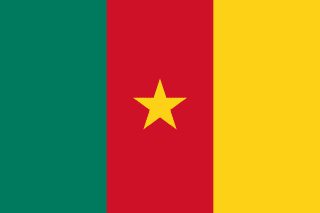
 37 Facts About Cameroon Most People Get Wrong
Cameroon is home to 27.9M people across 475,442 km², making it a country whose population is spread fairly evenly across its territory. It ranks 1st in the world for Biodiversity.
Below are 37 facts about Cameroon, covering history, geography, economy and culture, including several that regularly surprise people who think they already know the country.
37 Facts About Cameroon
A complete overview of Cameroon's history, geography, economy and culture, covering everything from population and borders to language, climate and travel.
Cameroon is called Africa in Miniature, containing nearly every African ecosystem.
Cameroon has more primate species than any other African country.
Mount Cameroon is West Africa's highest peak and an active volcano.
Cameroon was the first African team to reach a World Cup quarter-final in 1990.
Cameroon has 280 ethnic groups and over 600 languages, one of the most linguistically diverse countries in Africa.
Lake Nyos in Cameroon's northwest experienced a limnic eruption in 1986 when a carbon dioxide pocket burst from the lake, asphyxiating 1,800 people and 3,500 livestock in surrounding villages.
The Baka (Pygmy) people of Cameroon's Congo Basin forests have developed some of the most sophisticated plant knowledge and forest tracking skills of any people on Earth.
Mount Cameroon (4,095 m) is the highest mountain in West and Central Africa and is so active that lava flows have reached the sea within living memory.
Roger Milla, who danced around the corner flag after goals at the 1990 World Cup, was 38 years old and became one of Africa's most iconic football figures.
Samuel Eto'o won the African Player of the Year award four times, more than any other player in history.
Cameroon was the only country colonized partly by Germany (Kamerun, 1884-1916) then jointly administered by France and Britain after WWI, before reunifying in 1961.
Cameroon is the world's fifth-largest producer of cocoa; its fine-flavor cocoa is prized by premium chocolate makers in Europe.
The Dja Faunal Reserve is a UNESCO World Heritage Site and one of the largest undisturbed rainforest areas in Africa, home to western lowland gorillas, forest elephants, and chimpanzees.
Cameroon's Waza National Park in the far north is one of the finest wildlife reserves in Central Africa, sheltering elephants, lions, and giraffes.
Douala, Cameroon's economic capital, handles most trade for landlocked Chad, the Central African Republic, and parts of Niger, making it one of Central Africa's most strategic ports.
The Anglophone crisis in Cameroon's northwest and southwest regions, which began as language-rights protests in 2016, has escalated into a low-level civil war with tens of thousands displaced.
Cameroon's Comoe River basin contains the world's largest undisturbed area of lowland rainforest outside the Amazon.
The Bamenda Ring Road in northwest Cameroon circles through spectacular highland scenery, traditional sultanates, and weekly markets; it is considered one of Africa's finest overland journeys.
Cameroon's Indomitable Lions won the Africa Cup of Nations five times, making them the most successful team in the continent's biggest football tournament.
The forest elephant (Loxodonta cyclotis) was only confirmed as a species distinct from the savanna elephant in 2001; Cameroon's Congo Basin forests are its primary habitat.
Cameroon's Adamawa Plateau has a temperate climate unusual for equatorial Africa and is the center of the country's tea and arabica coffee production.
The traditional Lamidats (Emirates) of Cameroon's north, descended from 19th-century Fulani jihad states, still exercise significant ceremonial and social authority.
Cameroon's mangrove forests in the Wouri River estuary cover over 300,000 hectares and are the most extensive mangroves in Africa, sheltering manatees, crocodiles, and fish nurseries.
Cameroon's Mungo River valley separates the Anglophone and Francophone regions geographically; it has become a frontline in the Anglophone conflict.
Boko Haram's insurgency has spilled over from Nigeria into Cameroon's Far North region, displacing hundreds of thousands of people around Lake Chad.
Cameroon hosts over 100,000 refugees from the Central African Republic and Nigeria, making it one of the largest refugee-hosting countries in sub-Saharan Africa relative to its size.
Cameroon is located in Central Africa, Africa, with its capital city in Yaoundé.
The population of Cameroon is approximately 27.9M, spread across 475,442 km² of territory.
Cameroon has a population density of 59/km²: a moderate density for its region.
Cameroon has a coastline of 402 km, giving it access to maritime trade, fishing and coastal tourism.
Cameroon shares land borders with 6 countries: Nigeria, Chad, Central African Republic, Republic of the Congo, Gabon, Equatorial Guinea.
The official languages of Cameroon are French / English, making it straightforward for international visitors to communicate.
Cameroon uses the Central African CFA Franc (XAF) as its official currency.
Cameroon gained independence in 1960, establishing itself as a sovereign nation in Central Africa.
The total GDP of Cameroon is $47.1B, with a GDP per capita of $1,688, classifying it as a developing economy.
Cameroon has a varied, tropical coast, savanna north, highlands climate, with the best time to visit being November–April.
Cameroon is considered a Budget destination for travellers, with meals averaging $3–7.
Cameroon is called Africa in Miniature because it contains nearly every ecosystem found on the continent, rainforest, savanna, mountains, desert and coast. It has more primate species than any other African country.
🏆 Cameroon World Rankings
Cameroon holds several notable world rankings; here is how it compares globally:
Famous Places in Cameroon
Cameroon is home to several remarkable landmarks and destinations that draw visitors from around the world:
🌋 Mount Cameroon
West Africa's highest peak at 4,095m, an active volcano with an annual race to the summit
🦍 Dja Faunal Reserve
UNESCO one of Africa's largest and best-protected rainforests, home to gorillas and chimps
🦒 Waza National Park
The most visited park in Cameroon, lions, elephants, giraffes and hippos
🏔️ Ring Road, Northwest
A scenic circuit through volcanic crater lakes and traditional Grassfields kingdoms
Frequently Asked Questions About Cameroon
What is Cameroon famous for?
Cameroon is called Africa in Miniature because it contains nearly every ecosystem found on the continent, rainforest, savanna, mountains, desert and coast. It has more primate species than any other African country.
What is the capital of Cameroon?
The capital of Cameroon is Yaoundé.
What is the population of Cameroon?
The population estimate for Cameroon is approximately 27.9M.
What language do they speak in Cameroon?
The official languages of Cameroon are French / English.
When did Cameroon become an independent country?
Cameroon gained independence in 1960.
What currency does Cameroon use?
Cameroon uses the Central African CFA Franc (XAF).
What is the GDP of Cameroon?
Cameroon has a GDP of $47.1B, with a GDP per capita of $1,688.
Where is Cameroon located?
Cameroon is located in Central Africa, Africa.
Is Cameroon safe to visit?
Safety conditions in Cameroon vary by region. Always check your government's official travel advisory before visiting.
What are some fun facts about Cameroon?
Cameroon is called Africa in Miniature, containing nearly every African ecosystem. Cameroon has more primate species than any other African country. Mount Cameroon is West Africa's highest peak and an active volcano.
What are some interesting facts about Cameroon?
Cameroon has more primate species than any other African country. Mount Cameroon is West Africa's highest peak and an active volcano. Cameroon was the first African team to reach a World Cup quarter-final in 1990.
Cameroon facts: what should I know?
Cameroon is a country in Central Africa with a population of 27.9M. Its capital is Yaoundé and its official language is French / English. Cameroon is called Africa in Miniature, containing nearly every African ecosystem.
Explore More About Cameroon
Want to explore another country? Generate a random country and discover somewhere new.