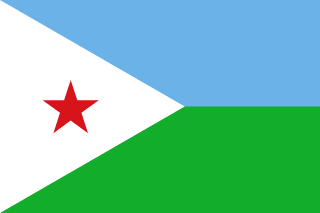
 37 Facts About Djibouti Most People Get Wrong
Djibouti is home to 988K people across 23,200 km², making it a country with vast stretches of open, largely empty land. It ranks 1st in the world for Strategic Location.
Below are 37 facts about Djibouti, covering history, geography, economy and culture, including several that regularly surprise people who think they already know the country.
37 Facts About Djibouti
A complete overview of Djibouti's history, geography, economy and culture, covering everything from population and borders to language, climate and travel.
Djibouti hosts more foreign military bases than any other country.
Lake Assal is Africa's lowest point at 155m below sea level.
Djibouti controls the Bab-el-Mandeb strait, one of world's busiest shipping lanes.
Whale sharks gather predictably off Djibouti, a world-class diving destination.
Djibouti's entire economy is built on its strategic location; most GDP comes from port fees, military base rents, and logistics for landlocked Ethiopia.
The Ethiopia-Djibouti Railway, reopened in 2017 as a Chinese-built electrified line, connects Addis Ababa to the port of Djibouti and is Ethiopia's main trade artery.
Lake Abbe, on the Djibouti-Ethiopia border, is a surreal salt flat of steaming mineral chimneys used as a location for the original Planet of the Apes film.
Djibouti sits atop the Afar Triangle, where three tectonic plates are pulling apart; in roughly 5-10 million years the region may crack open to form a new ocean.
China's first overseas military base since 1949 opened in Djibouti in 2017, joining existing US, French, Italian, Japanese, and Spanish bases there.
Lac Assal is one of the saltiest bodies of water on Earth, roughly 10 times saltier than the ocean.
The Gulf of Tadjoura cuts deep into Djibouti's territory, making the country almost surrounded by water despite being a continental nation.
Day Forest National Park on the Goda Mountains is Djibouti's only forested highland and home to the Djibouti francolin, a bird found nowhere else on Earth.
The Djibouti francolin has fewer than 1,500 individuals remaining, making it one of the rarest birds in the world.
Djibouti has virtually no agriculture; almost all food is imported, making it among the world's most import-dependent nations.
Djibouti City is home to roughly 60% of the country's entire population, making it one of the most urbanized nations in Africa.
Djibouti was formerly known as French Territory of the Afars and Issas; it voted for independence in 1977 as the last French colonial territory on the African mainland.
The Obock region is the departure point for thousands of African migrants crossing the Gulf of Aden to Yemen, making Djibouti a key transit country on one of the world's most dangerous migration routes.
The Somali piracy crisis of the 2000s-2010s made Djibouti the base for international naval patrols that eventually suppressed piracy in the Gulf of Aden.
Djibouti has very little fresh water, receiving under 150mm of rain per year and relying largely on desalination for its capital's water supply.
The Ghoubbet al-Kharab (Gulf of the Devil) is a deeply flooded volcanic caldera so geologically active it produces unusual hydrological phenomena.
Djibouti has one of the world's highest concentrations of military assets relative to its physical size, with more foreign troops per square kilometer than almost any sovereign nation.
The Afar people of Djibouti are among the world's most extreme desert cultures, historically navigating terrain so harsh that European explorers refused to enter it.
Djibouti's GDP per capita is higher than almost all its neighbors because of the extraordinary military and port fees it earns from hosting foreign powers.
The Berbera corridor and Gulf of Aden sea lane that Djibouti controls carries roughly 30% of all global container ship traffic annually.
Djibouti's Doraleh Multi-Purpose Port, built with Chinese investment, is one of the largest and most modern container terminals on the East African coast.
The Afar Triangle beneath Djibouti is one of the few places on Earth where a mid-ocean ridge is visible above sea level, making it a unique geological laboratory.
Djibouti is located in East Africa, Africa, with its capital city in Djibouti City.
The population of Djibouti is approximately 988K, spread across 23,200 km² of territory.
Djibouti has a population density of 43/km²: a moderate density for its region.
Djibouti has a coastline of 314 km, giving it access to maritime trade, fishing and coastal tourism.
Djibouti shares land borders with 3 countries: Eritrea, Ethiopia, Somalia.
The official languages of Djibouti are French / Arabic.
Djibouti uses the Djiboutian Franc (DJF) as its official currency.
Djibouti gained independence in 1977, establishing itself as a sovereign nation in East Africa.
The total GDP of Djibouti is $3.9B, with a GDP per capita of $3,948, classifying it as a lower-middle-income economy.
Djibouti has a hot desert, very hot may–september climate, with the best time to visit being October–April.
Djibouti is considered a Mid destination for travellers, with meals averaging $6–12.
Djibouti's Lake Assal is Africa's lowest point at 155m below sea level and one of the saltiest bodies of water on Earth. The country hosts more foreign military bases than any other nation, including US, French, Chinese and Japanese forces.
🏆 Djibouti World Rankings
Djibouti holds several notable world rankings; here is how it compares globally:
Famous Places in Djibouti
Djibouti is home to several remarkable landmarks and destinations that draw visitors from around the world:
🧂 Lake Assal
Africa's lowest point at 155m below sea level, a hyper-saline crater lake encrusted in white salt
🦩 Lake Abbe
A surreal landscape of limestone chimneys rising from a flamingo-filled soda lake
🦈 Gulf of Tadjoura
The best spot in the world for swimming with whale sharks, seasonal gatherings of hundreds
🌲 Day Forest National Park
Djibouti's only forest, a surprising green refuge of juniper trees in a desert country
Frequently Asked Questions About Djibouti
What is Djibouti famous for?
Djibouti's Lake Assal is Africa's lowest point at 155m below sea level and one of the saltiest bodies of water on Earth. The country hosts more foreign military bases than any other nation, including US, French, Chinese and Japanese forces.
What is the capital of Djibouti?
The capital of Djibouti is Djibouti City.
What is the population of Djibouti?
The population estimate for Djibouti is approximately 988K.
What language do they speak in Djibouti?
The official languages of Djibouti are French / Arabic.
When did Djibouti become an independent country?
Djibouti gained independence in 1977.
What currency does Djibouti use?
Djibouti uses the Djiboutian Franc (DJF).
What is the GDP of Djibouti?
Djibouti has a GDP of $3.9B, with a GDP per capita of $3,948.
Where is Djibouti located?
Djibouti is located in East Africa, Africa.
Is Djibouti safe to visit?
Safety conditions in Djibouti vary by region. Always check your government's official travel advisory before visiting.
What are some fun facts about Djibouti?
Djibouti hosts more foreign military bases than any other country. Lake Assal is Africa's lowest point at 155m below sea level. Djibouti controls the Bab-el-Mandeb strait, one of world's busiest shipping lanes.
What are some interesting facts about Djibouti?
Lake Assal is Africa's lowest point at 155m below sea level. Djibouti controls the Bab-el-Mandeb strait, one of world's busiest shipping lanes. Whale sharks gather predictably off Djibouti, a world-class diving destination.
Djibouti facts: what should I know?
Djibouti is a country in East Africa with a population of 988K. Its capital is Djibouti City and its official language is French / Arabic. Djibouti hosts more foreign military bases than any other country.
Explore More About Djibouti
Want to explore another country? Generate a random country and discover somewhere new.