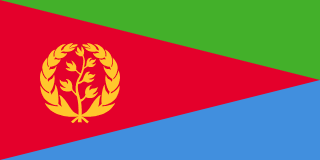
 37 Facts About Eritrea Most People Get Wrong
Eritrea is home to 3.5M people across 117,600 km², making it a country with vast stretches of open, largely empty land. It ranks 1st in the world for Art Deco.
Below are 37 facts about Eritrea, covering history, geography, economy and culture, including several that regularly surprise people who think they already know the country.
37 Facts About Eritrea
A complete overview of Eritrea's history, geography, economy and culture, covering everything from population and borders to language, climate and travel.
Asmara is a UNESCO World Heritage Site for its Italian Art Deco architecture.
Eritrea produces world-class cyclists, several have competed in the Tour de France.
Eritrea fought Africa's longest war for independence from Ethiopia (1961-1991).
The Dahlak Archipelago has some of the most pristine coral reefs in the Red Sea.
Asmara has the finest collection of Italian Modernist and Art Deco architecture outside of Italy, built as a showpiece capital for Mussolini's East African empire.
Eritrea gained independence in 1991 after a 30-year war; a 1993 referendum returned 99.8% for independence, one of the most decisive sovereignty votes in history.
Eritrea has been called the North Korea of Africa for its one-party state, indefinite military conscription, closed press, and near-total isolation from the outside world.
National service in Eritrea is effectively indefinite; soldiers conscripted for what was originally 18 months in practice serve for decades, driving one of Africa's largest refugee crises.
Despite a population of 3-4 million, Eritrea is consistently among the top five source countries of refugees crossing the Mediterranean to Europe.
The Danakil Depression in Eritrea is one of the hottest and most geologically extreme places on Earth, with active volcanoes, lava lakes, and sulphur springs.
The Nakfa fortress in northern Eritrea was the EPLF's base during the independence war; Nakfa became so synonymous with resistance that it is now the name of Eritrea's currency.
Eritrea is the only country in Africa with no independent press, no civil society organizations, and no functioning political opposition; Freedom House rates it the world's least free country.
The Eritrean railway, built by Italy in the early 20th century, climbs 2,394 meters from sea level to Asmara in 118 km through stunning scenery; a restored stretch operates occasionally.
The ancient port city of Adulis near Massawa was one of the most important trading centers of the ancient world, connecting the Roman Empire with India and Arabia.
Eritrea fought a devastating border war with Ethiopia from 1998 to 2000, killing an estimated 70,000-100,000 people over a strip of disputed territory barely 25 km wide.
Eritrea and Ethiopia made a surprise peace in 2018 under Ethiopian Prime Minister Abiy Ahmed, who won the Nobel Peace Prize; Eritrean president Isaias Afwerki joined him in Addis Ababa.
The Eritrean Orthodox Church is one of the oldest Christian denominations in the world, with a liturgy in Ge'ez, an ancient Semitic language used only in religious settings.
Massawa's Turkish Quarter has Ottoman-era coral-stone architecture from when the Ottomans controlled the Red Sea coast in the 16th-19th centuries.
Biniam Girmay became the first Black African to win a Grand Tour stage when he won at the 2022 Giro d'Italia; he is Eritrean.
Cycling became Eritrea's national passion during the Italian colonial period; the country has produced world-class riders disproportionate to its population and income level.
Asmara sits at 2,325 meters above sea level on the Hamasien Plateau, giving it a cool climate very unusual for a capital at its equatorial latitude.
The ancient Aksumite Empire, whose heartland covered what is now Eritrea and northern Ethiopia, was listed alongside Rome, Persia, and China as one of the four great powers of the ancient world.
Eritrea's nine ethnic groups include the Tigrinya (the largest), the Afar, and the Rashaida, a semi-nomadic people who arrived from Arabia in the 19th century.
Eritrea's Red Sea coastline, including the Dahlak Archipelago, has rarely been explored by divers and is considered among the most pristine reef systems in the world.
Eritrea has one of the lowest rates of mobile phone ownership and internet access in the world; the government suppresses telecommunications to limit outside communication.
The Eritrean independence movement was notable for its high proportion of women fighters; women made up roughly 30% of the EPLF's combat force during the war.
Eritrea is located in East Africa, Africa, with its capital city in Asmara.
The population of Eritrea is approximately 3.5M, spread across 117,600 km² of territory.
Eritrea has a population density of 30/km²: a moderate density for its region.
Eritrea has a coastline of 2,234 km, giving it access to maritime trade, fishing and coastal tourism.
Eritrea shares land borders with 3 countries: Sudan, Ethiopia, Djibouti.
The official languages of Eritrea are Tigrinya / Arabic / English, making it straightforward for international visitors to communicate.
Eritrea uses the Eritrean Nakfa (ERN) as its official currency.
Eritrea gained independence in 1993, establishing itself as a sovereign nation in East Africa.
The total GDP of Eritrea is $2.1B, with a GDP per capita of $600, classifying it as a developing economy.
Eritrea has a hot desert, mild highland climate, with the best time to visit being October–April.
Eritrea is considered a Budget destination for travellers, with meals averaging $3–7.
Asmara, Eritrea's capital, is a UNESCO World Heritage Site for its remarkably preserved Italian Art Deco architecture, the entire city is a living museum of 1930s Italian colonial design. Eritrea also produced multiple Tour de France cyclists.
🏆 Eritrea World Rankings
Eritrea holds several notable world rankings; here is how it compares globally:
Famous Places in Eritrea
Eritrea is home to several remarkable landmarks and destinations that draw visitors from around the world:
🏛️ Asmara, Art Deco City
UNESCO capital with the world's best-preserved Italian Art Deco and Futurist architecture
🐠 Dahlak Archipelago
Over 200 pristine islands in the Red Sea, world-class diving with untouched coral reefs
⛪ Debre Bizen Monastery
A 14th-century monastery perched on a mountain top, women forbidden, monks only
🌿 Filfil Solomuna Reserve
One of the last remaining lowland rainforests in the Horn of Africa
Frequently Asked Questions About Eritrea
What is Eritrea famous for?
Asmara, Eritrea's capital, is a UNESCO World Heritage Site for its remarkably preserved Italian Art Deco architecture, the entire city is a living museum of 1930s Italian colonial design. Eritrea also produced multiple Tour de France cyclists.
What is the capital of Eritrea?
The capital of Eritrea is Asmara.
What is the population of Eritrea?
The population estimate for Eritrea is approximately 3.5M.
What language do they speak in Eritrea?
The official languages of Eritrea are Tigrinya / Arabic / English.
When did Eritrea become an independent country?
Eritrea gained independence in 1993.
What currency does Eritrea use?
Eritrea uses the Eritrean Nakfa (ERN).
What is the GDP of Eritrea?
Eritrea has a GDP of $2.1B, with a GDP per capita of $600.
Where is Eritrea located?
Eritrea is located in East Africa, Africa.
Is Eritrea safe to visit?
Safety conditions in Eritrea vary by region. Always check your government's official travel advisory before visiting.
What are some fun facts about Eritrea?
Asmara is a UNESCO World Heritage Site for its Italian Art Deco architecture. Eritrea produces world-class cyclists, several have competed in the Tour de France. Eritrea fought Africa's longest war for independence from Ethiopia (1961-1991).
What are some interesting facts about Eritrea?
Eritrea produces world-class cyclists, several have competed in the Tour de France. Eritrea fought Africa's longest war for independence from Ethiopia (1961-1991). The Dahlak Archipelago has some of the most pristine coral reefs in the Red Sea.
Eritrea facts: what should I know?
Eritrea is a country in East Africa with a population of 3.5M. Its capital is Asmara and its official language is Tigrinya / Arabic / English. Asmara is a UNESCO World Heritage Site for its Italian Art Deco architecture.
Explore More About Eritrea
Want to explore another country? Generate a random country and discover somewhere new.