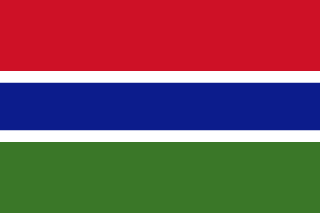
 37 Facts About Gambia Most People Get Wrong
Gambia is home to 2.6M people across 11,295 km², making it more densely populated than most of its neighbours. It ranks 1st in the world for Smallest.
Below are 37 facts about Gambia, covering history, geography, economy and culture, including several that regularly surprise people who think they already know the country.
37 Facts About Gambia
A complete overview of Gambia's history, geography, economy and culture, covering everything from population and borders to language, climate and travel.
Gambia is the smallest country on mainland Africa.
The country has 583 bird species, exceptional birdwatching per square kilometre.
The Gambia River runs through the entire country, it's shaped like a snake.
Juffureh village is the ancestral home of Kunta Kinte from Alex Haley's Roots.
Gambia is so narrow that at its widest point it is only 50 km across; from the river you can see both banks simultaneously in some places.
The Gambia River was one of the most important highways for the transatlantic slave trade; an estimated 3 million Africans passed down it as captives between the 16th and 19th centuries.
Kunta Kinte, the fictional ancestor in Alex Haley's Roots whose story of enslavement inspired a TV series watched by 130 million Americans in 1977, came from the Gambian village of Juffureh.
James Island (now Kunta Kinteh Island) in the Gambia River was a British slave-trading fort and is now a UNESCO World Heritage Site.
Gambia has more bird species per square kilometer than any country in the world, making it the premier birdwatching destination in West Africa.
Yahya Jammeh ruled Gambia from 1994 to 2017, claimed he could personally cure HIV/AIDS with herbal remedies on Thursdays, and declared himself a prophet.
After Jammeh lost the 2016 election and initially refused to step down, ECOWAS troops were mobilized and diplomatic pressure forced him into exile in a rare peaceful democratic transition.
Gambia is completely surrounded by Senegal except for its Atlantic coastline, making it the most geographically unusual country in Africa.
Gambia's Stone Circles at Wassu and Kerr Batch, prehistoric megalithic monuments dating to 750-1600 CE, are UNESCO World Heritage Sites among the most mysterious features in West Africa.
Gambia's Abuko Nature Reserve, only 105 hectares, contains crocodiles, monkeys, civets, and hundreds of bird species in one of the smallest but most species-dense reserves in Africa.
Gambia's economy relies almost entirely on groundnuts (peanuts), tourism, and remittances; the country has virtually no mineral resources.
The Gambia River is tidal along its entire navigable length; the ocean pushes salt water more than 200 km upstream, making fresh water access a challenge throughout the country.
Gambia's traditional wrestlers are national celebrities; bouts at major festivals attract thousands of spectators.
Gambia has the famous Kachikally Crocodile Pool in Bakau, one of the country's most visited sites, where wild crocodiles are fed and protected in a sacred community tradition.
Remittances from Gambians in Spain and the UK exceed government revenue in some years, making Gambia one of the most remittance-dependent countries in Africa.
Gambia's Atlantic beaches at Kololi and Cape Point are among the most popular winter sun destinations for British and Scandinavian tourists.
Gambian kora music, particularly the tradition of the Mandinka people, is considered among the finest in West Africa; legendary players like Foday Musa Suso have toured internationally.
Gambia's 2022 case against Myanmar at the International Court of Justice on behalf of Rohingya genocide victims showed extraordinary diplomatic initiative for one of the world's smallest nations.
Gambia's two-year attempt at political confederation with Senegal (Senegambia, 1982-1989) dissolved due to disagreements over integration despite sharing nearly all borders.
Gambia's Tendaba Camp on the south bank of the Gambia River is West Africa's most famous birdwatching camp, attracting ornithologists from around the world.
The sacred forests of the Mandinka people in Gambia, called sacred groves (kankurang), protect both wildlife and traditional initiation ceremonies and are protected by community law.
Gambia has the smallest economy in mainland Africa yet consistently ranks higher on governance and press freedom indicators than most of its larger neighbors.
Gambia is located in West Africa, Africa, with its capital city in Banjul.
The population of Gambia is approximately 2.6M, spread across 11,295 km² of territory.
Gambia has a population density of 230/km²: one of the more densely populated countries in the region.
Gambia has a coastline of 80 km, giving it access to maritime trade, fishing and coastal tourism.
Gambia shares land borders with 1 country: Senegal.
The official language of Gambia is English, making it straightforward for international visitors to communicate.
Gambia uses the Gambian Dalasi (GMD) as its official currency.
Gambia gained independence in 1965, establishing itself as a sovereign nation in West Africa.
The total GDP of Gambia is $2.1B, with a GDP per capita of $808, classifying it as a developing economy.
Gambia has a tropical, dry season november–may climate, with the best time to visit being November–May.
Gambia is considered a Budget destination for travellers, with meals averaging $2–5.
The Gambia is the smallest country on mainland Africa, a narrow strip of land surrounding the Gambia River. It has 583 bird species, making it one of the world's best birdwatching destinations per square kilometre.
🏆 Gambia World Rankings
Gambia holds several notable world rankings; here is how it compares globally:
Famous Places in Gambia
Gambia is home to several remarkable landmarks and destinations that draw visitors from around the world:
🐊 Kachikally Crocodile Pool
A sacred pool of 80+ Nile crocodiles that locals touch for good luck and fertility
🌍 Juffureh Village
The ancestral home of Kunta Kinte from Alex Haley's Roots, a pilgrimage site for the diaspora
🦜 Abuko Nature Reserve
A small but remarkable rainforest reserve, one of Africa's best birdwatching spots
🪨 Stone Circles of Senegambia
UNESCO mysterious megalithic circles built between 750 and 1600 AD
Frequently Asked Questions About Gambia
What is Gambia famous for?
The Gambia is the smallest country on mainland Africa, a narrow strip of land surrounding the Gambia River. It has 583 bird species, making it one of the world's best birdwatching destinations per square kilometre.
What is the capital of Gambia?
The capital of Gambia is Banjul.
What is the population of Gambia?
The population estimate for Gambia is approximately 2.6M.
What language do they speak in Gambia?
The official language of Gambia is English.
When did Gambia become an independent country?
Gambia gained independence in 1965.
What currency does Gambia use?
Gambia uses the Gambian Dalasi (GMD).
What is the GDP of Gambia?
Gambia has a GDP of $2.1B, with a GDP per capita of $808.
Where is Gambia located?
Gambia is located in West Africa, Africa.
Is Gambia safe to visit?
Safety conditions in Gambia vary by region. Always check your government's official travel advisory before visiting.
What are some fun facts about Gambia?
Gambia is the smallest country on mainland Africa. The country has 583 bird species, exceptional birdwatching per square kilometre. The Gambia River runs through the entire country, it's shaped like a snake.
What are some interesting facts about Gambia?
The country has 583 bird species, exceptional birdwatching per square kilometre. The Gambia River runs through the entire country, it's shaped like a snake. Juffureh village is the ancestral home of Kunta Kinte from Alex Haley's Roots.
Gambia facts: what should I know?
Gambia is a country in West Africa with a population of 2.6M. Its capital is Banjul and its official language is English. Gambia is the smallest country on mainland Africa.
Explore More About Gambia
Want to explore another country? Generate a random country and discover somewhere new.