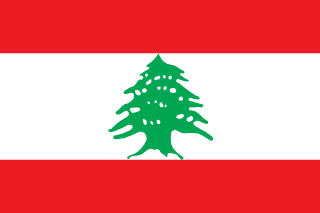
 37 Facts About Lebanon Most People Get Wrong
Lebanon is home to 5.4M people across 10,452 km², making it one of the most densely packed nations on Earth. It ranks 1st in the world for Religious Diversity.
Below are 37 facts about Lebanon, covering history, geography, economy and culture, including several that regularly surprise people who think they already know the country.
37 Facts About Lebanon
A complete overview of Lebanon's history, geography, economy and culture, covering everything from population and borders to language, climate and travel.
Lebanon has 18 officially recognised religious sects, its government is divided proportionally between them.
Beirut has been destroyed and rebuilt 7 times throughout history.
Lebanon is the most mountainous country in the Middle East.
The cedars of Lebanon are mentioned 75 times in the Bible.
Byblos (modern Jbeil), north of Beirut, is one of the oldest continuously inhabited cities on Earth, occupied since 5000 BCE, and gave us the word Bible (from Greek Byblos).
The Phoenicians, who originated in what is now Lebanon, invented the first true alphabet around 1050 BCE; every modern alphabet globally descends from it.
The ancient Phoenician city of Tyre, in southern Lebanon, founded colonies across the Mediterranean including Carthage (modern Tunis).
Lebanon's Bekaa Valley has been producing wine since at least 7,000 years ago, making it one of the oldest wine regions on Earth.
The Baalbek temples in eastern Lebanon are among the finest Roman temples ever built; the Temple of Jupiter originally had 54 columns each 22 meters tall.
Lebanon produces more journalists, academics, and writers per capita than almost any other Arab country; Beirut was the Arab world's publishing capital throughout the 20th century.
The August 2020 Beirut port explosion, caused by 2,750 tonnes of improperly stored ammonium nitrate, was one of the largest non-nuclear explosions in history.
Lebanon's Cedar of Lebanon tree was used by ancient Egyptians to build their pharaonic ships and by Solomon to build the First Temple in Jerusalem.
The Lebanese diaspora numbers an estimated 8-14 million people worldwide, roughly double the country's population of 5 million.
Lebanon's 2019-present economic collapse is considered one of the worst financial crises in the world since the 1850s; the Lebanese pound lost over 95% of its value.
Lebanon is the only Arab country where you can ski in the mountains in the morning and swim in the Mediterranean the same afternoon.
Lebanese cuisine, including hummus, falafel, tabbouleh, and kibbeh, is among the most widely replicated food traditions in the world.
Beirut was known as the Paris of the Middle East before the civil war, a major financial and cosmopolitan center rivaling Cairo and Istanbul.
Lebanon's Qadisha Valley, a UNESCO World Heritage Site, has been a place of Christian monastic retreat since the earliest days of Christianity.
The Lebanese Maronite Church has been in communion with Rome since the Crusades, making Lebanon's Christians among the oldest continuously practicing Christian communities in the world.
Lebanon's 1975-1990 civil war involved at least 13 different armed factions and is considered one of the most complex civil wars of the 20th century.
Hezbollah operates a state-within-a-state in southern Lebanon, running hospitals, schools, and social services alongside its military operations.
Lebanon's highest peak, Qurnat as Sawda at 3,088 meters, is snow-capped for most of the year.
The Chouf Biosphere Reserve protects Lebanon's largest remaining cedar forest and is home to wolves, hyenas, and migratory raptors.
The Maalula village in Syria, which preserves the Aramaic language spoken in ancient Lebanon and Judea, reflects how Levantine culture once stretched across the entire region.
Lebanon's National Museum in Beirut holds sarcophagi from Byblos and Sidon dating to the 5th century BCE, among the most important archaeological artifacts in the Middle East.
Beirut's American University (founded 1866) and Saint Joseph University (founded 1875) made the city the intellectual capital of the Arab world for over a century.
Lebanon is located in Middle East, Asia, with its capital city in Beirut.
The population of Lebanon is approximately 5.4M, spread across 10,452 km² of territory.
Lebanon has a population density of 517/km²: one of the more densely populated countries in the region.
Lebanon has a coastline of 225 km, giving it access to maritime trade, fishing and coastal tourism.
Lebanon shares land borders with 2 countries: Syria, Israel.
The official language of Lebanon is Arabic.
Lebanon uses the Lebanese Pound (LBP) as its official currency.
Lebanon gained independence in 1943, establishing itself as a sovereign nation in Middle East.
The total GDP of Lebanon is $23.1B, with a GDP per capita of $4,278, classifying it as a lower-middle-income economy.
Lebanon has a mediterranean coast, alpine mountains climate, with the best time to visit being April–June, September–October.
Lebanon is considered a Budget–Mid destination for travellers, with meals averaging $5–12.
Lebanon is one of the smallest countries in the world yet one of the most religiously complex, 18 officially recognised religious communities share power through a unique confessional political system. Its cuisine has spread to every corner of the globe.
🏆 Lebanon World Rankings
Lebanon holds several notable world rankings; here is how it compares globally:
Famous Places in Lebanon
Lebanon is home to several remarkable landmarks and destinations that draw visitors from around the world:
🪨 Jeita Grotto
An extraordinary underground cave system with the world's largest stalactite, 8.2m long
🏛️ Baalbek Roman Ruins
UNESCO colossal Roman temples, the Temple of Jupiter has the largest stone blocks ever used in construction
🏺 Byblos
UNESCO one of the oldest continuously inhabited cities in the world, 7,000 years of history
🌲 Cedars of God (Arz el-Rab)
A grove of ancient cedar trees, some over 3,000 years old, survivors of Lebanon's once-vast cedar forests
Frequently Asked Questions About Lebanon
What is Lebanon famous for?
Lebanon is one of the smallest countries in the world yet one of the most religiously complex, 18 officially recognised religious communities share power through a unique confessional political system. Its cuisine has spread to every corner of the globe.
What is the capital of Lebanon?
The capital of Lebanon is Beirut.
What is the population of Lebanon?
The population estimate for Lebanon is approximately 5.4M.
What language do they speak in Lebanon?
The official language of Lebanon is Arabic.
When did Lebanon become an independent country?
Lebanon gained independence in 1943.
What currency does Lebanon use?
Lebanon uses the Lebanese Pound (LBP).
What is the GDP of Lebanon?
Lebanon has a GDP of $23.1B, with a GDP per capita of $4,278.
Where is Lebanon located?
Lebanon is located in Middle East, Asia.
Is Lebanon safe to visit?
Safety conditions in Lebanon vary by region. Always check your government's official travel advisory before visiting.
What are some fun facts about Lebanon?
Lebanon has 18 officially recognised religious sects, its government is divided proportionally between them. Beirut has been destroyed and rebuilt 7 times throughout history. Lebanon is the most mountainous country in the Middle East.
What are some interesting facts about Lebanon?
Beirut has been destroyed and rebuilt 7 times throughout history. Lebanon is the most mountainous country in the Middle East. The cedars of Lebanon are mentioned 75 times in the Bible.
Lebanon facts: what should I know?
Lebanon is a country in Middle East with a population of 5.4M. Its capital is Beirut and its official language is Arabic. Lebanon has 18 officially recognised religious sects, its government is divided proportionally between them.
Explore More About Lebanon
Want to explore another country? Generate a random country and discover somewhere new.