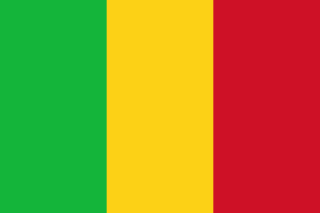
 37 Facts About Mali Most People Get Wrong
Mali is home to 22.4M people across 1,240,192 km², making it a country with vast stretches of open, largely empty land. It ranks 1st in the world for Richest Person Ever.
Below are 37 facts about Mali, covering history, geography, economy and culture, including several that regularly surprise people who think they already know the country.
37 Facts About Mali
A complete overview of Mali's history, geography, economy and culture, covering everything from population and borders to language, climate and travel.
Timbuktu was once the wealthiest and most important city in Africa.
Mali's Djinguereber Mosque is one of the world's greatest mud-brick structures.
Mali was the centre of three great empires, Ghana, Mali and Songhai.
Mansa Musa of the Mali Empire was the richest person in history, estimated $400 billion.
Timbuktu's ancient libraries contain an estimated 700,000 surviving manuscripts on mathematics, astronomy, medicine, and Islamic law from the 13th to 17th centuries.
The city of Djenne has been continuously inhabited since 250 BCE, making it one of the oldest cities in sub-Saharan Africa.
The Great Mosque of Djenne is the largest mud-brick building in the world, and the entire community replasters it each year in a festival called the Crepissage.
Mansa Musa's pilgrimage to Mecca in 1324 was so lavish, distributing 18 tonnes of gold along the route, that it caused inflation across North Africa and the Middle East for years.
Mali's Niger Inland Delta floods seasonally to create one of the most productive wetland ecosystems in Africa, supporting millions of migratory birds.
Mali has the largest elephant herd in West Africa: over 350 desert elephants that migrate a 600-km circuit through the Sahara, the longest known elephant migration.
The Songhai Empire, which conquered Timbuktu in 1468, was one of the largest empires in African history, stretching from the Atlantic to what is now Nigeria.
Mali's Gao was the capital of the Songhai Empire and is home to the Tomb of Askia, a UNESCO World Heritage Site.
The kora, a 21-string instrument played by Malian griots, is considered one of the most complex and beautiful instruments in the world.
Mali is Africa's third-largest producer of gold, with gold accounting for over 75% of the country's export revenues.
Bogolan (mud cloth) is a Malian hand-dyed fabric whose geometric patterns carry spiritual meaning; it has influenced global fashion designers from John Galliano to Yves Saint Laurent.
The Falaise de Bandiagara, a 150-km sandstone cliff, has been home to the Dogon people since the 15th century; they fled there to escape the expanding Mali Empire.
The Dogon people of Mali's Bandiagara Escarpment described the orbit of Sirius B, a star invisible to the naked eye, centuries before modern telescopes confirmed its existence.
In 2012, jihadist rebels briefly seized northern Mali and destroyed UNESCO-protected ancient shrines in Timbuktu before French military intervention pushed them back.
Mali's 2021 and 2023 military coups put it under junta leadership that expelled French forces and brought in Russian mercenaries, shifting the geopolitics of the entire Sahel.
Medieval Arab writers referred to Mali as a land where gold grew like plants; the kingdom's riches came from controlling trans-Saharan trade.
Amadou Hampate Ba, Mali's greatest writer, said: In Africa, when an old man dies, a library burns to the ground, a phrase that defined global appreciation for oral tradition.
The Sahara was once green savanna; rock art in northern Mali shows hippos, elephants, and cattle in landscapes now completely desert.
Segou on the Niger River is the cultural heart of the Bambara people and the center of Mali's distinctive bogolan textile tradition.
Mali's Boucle du Baoule National Park shelters populations of lions, cheetahs, and hippos in the west of the country.
The Segou Kingdom, last of the major non-Islamic Bambara states, resisted both Islamic jihad and French conquest before finally falling to France in 1890.
Mali's Saharan north is one of the least-mapped and most sparsely populated territories in the world, yet it was once a highway of civilization.
Mali is located in West Africa, Africa, with its capital city in Bamako.
The population of Mali is approximately 22.4M, spread across 1,240,192 km² of territory.
Mali has a population density of 18/km²: one of the most sparsely populated countries on Earth.
Mali is a landlocked country with no coastline, relying entirely on neighbouring countries for access to international trade routes.
Mali shares land borders with 7 countries: Algeria, Niger, Burkina Faso, Guinea, Senegal, Mauritania, Ivory Coast.
The official language of Mali is French.
Mali uses the West African CFA Franc (XOF) as its official currency.
Mali gained independence in 1960, establishing itself as a sovereign nation in West Africa.
The total GDP of Mali is $19.1B, with a GDP per capita of $852, classifying it as a developing economy.
Mali has a hot desert north, tropical south climate, with the best time to visit being November–February.
Mali is considered a Budget destination for travellers, with meals averaging $2–5.
Mansa Musa, emperor of the Mali Empire in the 14th century, is considered the richest person in history with an estimated fortune of $400 billion in today's money. When he made his pilgrimage to Mecca in 1324, he brought so much gold that he crashed the Egyptian economy.
🏆 Mali World Rankings
Mali holds several notable world rankings; here is how it compares globally:
Famous Places in Mali
Mali is home to several remarkable landmarks and destinations that draw visitors from around the world:
🕌 Great Mosque of Djenné
UNESCO the world's largest mud-brick building, rebuilt annually by the community in a great festival
🏛️ Timbuktu
UNESCO ancient city of learning, once home to 180 Quranic schools and 25,000 students
🏔️ Cliff of Bandiagara (Dogon Country)
UNESCO dramatic sandstone escarpment with 700-year-old cliff dwellings of the Dogon people
🌊 Niger River
The third longest river in Africa flows through Mali creating a vast inland delta teeming with wildlife
Frequently Asked Questions About Mali
What is Mali famous for?
Mansa Musa, emperor of the Mali Empire in the 14th century, is considered the richest person in history with an estimated fortune of $400 billion in today's money. When he made his pilgrimage to Mecca in 1324, he brought so much gold that he crashed the Egyptian economy.
What is the capital of Mali?
The capital of Mali is Bamako.
What is the population of Mali?
The population estimate for Mali is approximately 22.4M.
What language do they speak in Mali?
The official language of Mali is French.
When did Mali become an independent country?
Mali gained independence in 1960.
What currency does Mali use?
Mali uses the West African CFA Franc (XOF).
What is the GDP of Mali?
Mali has a GDP of $19.1B, with a GDP per capita of $852.
Where is Mali located?
Mali is located in West Africa, Africa.
Is Mali safe to visit?
Safety conditions in Mali vary by region. Always check your government's official travel advisory before visiting.
What are some fun facts about Mali?
Timbuktu was once the wealthiest and most important city in Africa. Mali's Djinguereber Mosque is one of the world's greatest mud-brick structures. Mali was the centre of three great empires, Ghana, Mali and Songhai.
What are some interesting facts about Mali?
Mali's Djinguereber Mosque is one of the world's greatest mud-brick structures. Mali was the centre of three great empires, Ghana, Mali and Songhai. Mansa Musa of the Mali Empire was the richest person in history, estimated $400 billion.
Mali facts: what should I know?
Mali is a country in West Africa with a population of 22.4M. Its capital is Bamako and its official language is French. Timbuktu was once the wealthiest and most important city in Africa.
Explore More About Mali
Want to explore another country? Generate a random country and discover somewhere new.