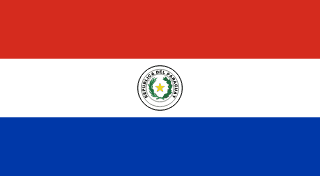
 37 Facts About Paraguay Most People Get Wrong
Paraguay is home to 7.4M people across 406,752 km², making it a country with vast stretches of open, largely empty land. It ranks 1st in the world for Organic Sugar.
Below are 37 facts about Paraguay, covering history, geography, economy and culture, including several that regularly surprise people who think they already know the country.
37 Facts About Paraguay
A complete overview of Paraguay's history, geography, economy and culture, covering everything from population and borders to language, climate and travel.
Paraguay is one of only two landlocked countries in South America.
Paraguay is the world's largest exporter of organic sugar.
The Triple Alliance War (1864-1870) killed 60-70% of Paraguay's population, the deadliest war relative to population in modern history.
Paraguay is the world's 4th largest exporter of soybeans.
The Triple Alliance War left Paraguay with barely 30,000 men in a population that had been 500,000; women outnumbered men four to one at war's end.
Paraguay is completely powered by hydroelectricity; the Itaipu Dam, shared with Brazil, is the world's second-largest hydroelectric plant and generates more electricity than Paraguay can use.
Paraguay sells its surplus electricity to Brazil and Argentina, making electricity exports the country's third-largest source of income.
Paraguay is one of only two countries where an indigenous language, Guarani, is co-official with the colonial language and spoken as a first language by most of the population.
Guarani is spoken by over 95% of Paraguayans and has contributed hundreds of words to South American Spanish, including jaguar, tapir, and maracas.
Paraguay was home to the most powerful Jesuit missions in South America, establishing self-governing indigenous communities from 1609 until the Jesuits were expelled in 1767.
The Jesuit mission ruins at La Santísima Trinidad and Jesus de Tavarangue are UNESCO World Heritage Sites.
The Chaco War (1932-1935) against Bolivia was fought over the Gran Chaco; Paraguay won most of the territory.
Paraguay's Gran Chaco, covering 60% of the country, is one of the last great wilderness areas in South America, home to jaguars, giant anteaters, tapirs, and peccaries.
The Mennonite communities of Paraguay's Chaco operate some of the most productive dairy farms in South America, transforming harsh desert into thriving agricultural land.
Alfredo Stroessner ruled Paraguay as a dictator from 1954 to 1989, the second-longest dictatorship in Latin American history.
Paraguay was one of the main destinations for Nazi war criminals fleeing Europe after WWII; Josef Mengele among others fled there with government complicity.
Paraguay's traditional handmade lace called nanduti (meaning spiderweb in Guarani) has been produced since the 17th century and is a UNESCO Intangible Cultural Heritage.
The Paraguayan harp is one of the country's most distinctive cultural exports; Paraguay has one of the world's strongest folk harp traditions.
Paraguay has the lowest urbanization rate in South America; a significant proportion of its population still lives in rural areas farming subsistence crops.
The Pantanal, the world's largest tropical wetland, straddles the Paraguay-Brazil-Bolivia border; the Paraguayan portion is one of the most wildlife-rich areas in South America.
The Guarani people were among the most widespread indigenous groups in South America before European contact, spanning from the Amazon to the Rio de la Plata.
Paraguay has no capital gains tax and one of South America's lowest costs of living, attracting wealthy expatriates and retirees from Brazil and Argentina.
The Parana River, one of South America's longest at 4,880 km, forms Paraguay's eastern border and is the river on which Itaipu Dam was built.
Brazilian farmers (Brasiguayos) own vast tracts of farmland in eastern Paraguay, creating a form of demographic and economic pressure unique in South America.
Paraguay was the last South American country to abolish slavery, in 1869, at the very end of the Triple Alliance War.
The ruins of the Jesuit reductions contain some of the finest Baroque stone carvings in the Americas, created by indigenous Guarani craftsmen trained by Jesuit missionaries.
Paraguay is located in South America, South America, with its capital city in Asunción.
The population of Paraguay is approximately 7.4M, spread across 406,752 km² of territory.
Paraguay has a population density of 18/km²: one of the most sparsely populated countries on Earth.
Paraguay is a landlocked country with no coastline, relying entirely on neighbouring countries for access to international trade routes.
Paraguay shares land borders with 3 countries: Argentina, Bolivia, Brazil.
The official languages of Paraguay are Spanish / Guaraní.
Paraguay uses the Paraguayan Guaraní (PYG) as its official currency.
Paraguay gained independence in 1811, establishing itself as a sovereign nation in South America.
The total GDP of Paraguay is $40.7B, with a GDP per capita of $5,500, classifying it as a lower-middle-income economy.
Paraguay has a tropical to subtropical, hot year-round climate, with the best time to visit being April–September.
Paraguay is considered a Budget destination for travellers, with meals averaging $3–7.
The Triple Alliance War of 1864–1870 was the deadliest war in modern history relative to population, it killed 60-70% of Paraguay's entire population, including 90% of adult men. The country took a century to recover.
🏆 Paraguay World Rankings
Paraguay holds several notable world rankings; here is how it compares globally:
Famous Places in Paraguay
Paraguay is home to several remarkable landmarks and destinations that draw visitors from around the world:
💧 Itaipu Dam
The world's largest hydroelectric dam by energy output, shared with Brazil, powers 75% of Paraguay
🏛️ Jesuit Missions of La Santísima Trinidad
UNESCO ruins of a 17th-century Jesuit mission where Guaraní people lived in a utopian community
🏙️ Asunción Historic Centre
One of South America's oldest capitals with colonial architecture and vibrant street life
🌿 Ybycuí National Park
Paraguay's oldest national park, waterfalls, ironworks ruins and Atlantic Forest
Frequently Asked Questions About Paraguay
What is Paraguay famous for?
The Triple Alliance War of 1864–1870 was the deadliest war in modern history relative to population, it killed 60-70% of Paraguay's entire population, including 90% of adult men. The country took a century to recover.
What is the capital of Paraguay?
The capital of Paraguay is Asunción.
What is the population of Paraguay?
The population estimate for Paraguay is approximately 7.4M.
What language do they speak in Paraguay?
The official languages of Paraguay are Spanish / Guaraní.
When did Paraguay become an independent country?
Paraguay gained independence in 1811.
What currency does Paraguay use?
Paraguay uses the Paraguayan Guaraní (PYG).
What is the GDP of Paraguay?
Paraguay has a GDP of $40.7B, with a GDP per capita of $5,500.
Where is Paraguay located?
Paraguay is located in South America, South America.
Is Paraguay safe to visit?
Safety conditions in Paraguay vary by region. Always check your government's official travel advisory before visiting.
What are some fun facts about Paraguay?
Paraguay is one of only two landlocked countries in South America. Paraguay is the world's largest exporter of organic sugar. The Triple Alliance War (1864-1870) killed 60-70% of Paraguay's population, the deadliest war relative to population in modern history.
What are some interesting facts about Paraguay?
Paraguay is the world's largest exporter of organic sugar. The Triple Alliance War (1864-1870) killed 60-70% of Paraguay's population, the deadliest war relative to population in modern history. Paraguay is the world's 4th largest exporter of soybeans.
Paraguay facts: what should I know?
Paraguay is a country in South America with a population of 7.4M. Its capital is Asunción and its official language is Spanish / Guaraní. Paraguay is one of only two landlocked countries in South America.
Explore More About Paraguay
Want to explore another country? Generate a random country and discover somewhere new.