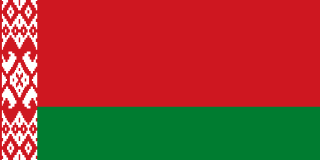
 Belarus Population: 9.4M People, Density & Key Facts
Belarus is a country with vast stretches of largely empty land: 9.4M people across 207,600 km², giving a density of 45/km².
GDP per capita stands at $7,766: below the global average, reflecting a developing economy. The capital, Minsk, is the political, economic and cultural centre of the country.
Population and economic figures are approximate reference values. Sources may report different years, so these figures are not live estimates.
📊 Population at a Glance
About Belarus's Population
With a population of 9.4M, Belarus is home to a significant number of people within its 207,600 km² of territory. The population density of 45/km² reflects how people are distributed across the country: a low density suggesting significant open space and rural areas across the country.
The capital city, Minsk, serves as the administrative, cultural and economic heart of Belarus. As a landlocked country, Belarus's population is distributed entirely across its inland territory, without access to a coastline. This has historically shaped trade patterns and economic development.
In economic terms, Belarus has a total GDP of $73B, translating to $7,766 per person. This figure gives a broad indication of average living standards, though income distribution varies considerably across different regions and communities within the country. The official currency is the Belarusian Ruble (BYN).
Belarus gained independence in 1991 and has since developed a distinct national identity shaped by its geography, history and culture. The official languages are Belarusian / Russian, which is spoken by the vast majority of the population in daily life, education and government.
Within the Eastern Europe region, Belarus sits alongside Ukraine (41.2M), Romania (19.1M), Moldova (2.6M). This regional context helps illustrate how Belarus's population size compares to its neighbours.
Frequently Asked Questions about Belarus's Population
What is the population of Belarus?
The population estimate for Belarus is approximately 9.4M people.
What is the capital city of Belarus?
The capital city of Belarus is Minsk, which serves as the country's main administrative and cultural hub.
How densely populated is Belarus?
Belarus has a population density of 45/km². This is a moderate population density.
What is the GDP per capita of Belarus?
Belarus has a GDP per capita of $7,766, with a total GDP of $73B. This gives an indication of average economic output per person.
What language do people speak in Belarus?
The official languages of Belarus are Belarusian / Russian.
How big is Belarus?
Belarus covers a total area of 207,600 km². With a population of 9.4M, that gives a density of 45/km².
When did Belarus gain independence?
Belarus gained independence in 1991.
What currency is used in Belarus?
The official currency of Belarus is the Belarusian Ruble (BYN).
Curious about another country? Generate a random country and explore its population, geography and more.