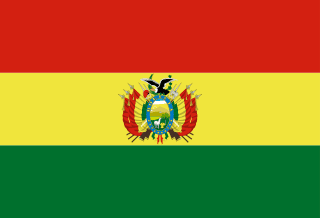
 15 Facts About Bolivia Most People Get Wrong
Bolivia is home to 12.1M people across 1,098,581 km², making it a country with vast stretches of open, largely empty land. It ranks 1st in the world for Salt Flat.
Below are 15 facts about Bolivia, covering history, geography, economy and culture, including several that regularly surprise people who think they already know the country.
15 Facts About Bolivia
A complete overview of Bolivia's history, geography, economy and culture, covering everything from population and borders to language, climate and travel.
Bolivia has two capitals, La Paz (government) and Sucre (constitutional).
The Salar de Uyuni is the world's largest salt flat at 10,582 km².
Bolivia has the highest navigable lake in the world, Lake Titicaca at 3,812m.
Bolivia is one of only two landlocked countries in South America.
Bolivia is located in South America, South America, with its capital city in Sucre / La Paz.
The population of Bolivia is approximately 12.1M, spread across 1,098,581 km² of territory.
Bolivia has a population density of 11/km²: one of the most sparsely populated countries on Earth.
Bolivia is a landlocked country with no coastline, relying entirely on neighbouring countries for access to international trade routes.
Bolivia shares land borders with 5 countries: Peru, Chile, Argentina, Paraguay, Brazil.
The official languages of Bolivia are Spanish / Quechua / Aymara.
Bolivia uses the Boliviano (BOB) as its official currency.
Bolivia gained independence in 1825, establishing itself as a sovereign nation in South America.
The total GDP of Bolivia is $40.9B, with a GDP per capita of $3,370, classifying it as a lower-middle-income economy.
Bolivia has a varies dramatically, tropical to alpine climate, with the best time to visit being May–October.
Bolivia is considered a Budget destination for travellers, with meals averaging $2–6.
Bolivia's Salar de Uyuni is the world's largest salt flat, so reflective in the wet season that it becomes a perfect mirror of the sky. The country also holds the world's largest lithium reserves, crucial for modern batteries.
🏆 Bolivia World Rankings
Bolivia holds several notable world rankings; here is how it compares globally:
Famous Places in Bolivia
Bolivia is home to several remarkable landmarks and destinations that draw visitors from around the world:
🧂 Salar de Uyuni
The world's largest salt flat at 10,582 km², a blinding white mirror at 3,656m altitude
🌊 Lake Titicaca
The world's highest navigable lake at 3,812m, shared with Peru
🏛️ Tiwanaku Ruins
A UNESCO pre-Columbian city that was the capital of a powerful empire from 500–1000 AD
🌕 Valle de la Luna
An eerie moonscape of clay spires and labyrinths sculpted by erosion outside La Paz
Frequently Asked Questions About Bolivia
What is Bolivia famous for?
Bolivia's Salar de Uyuni is the world's largest salt flat, so reflective in the wet season that it becomes a perfect mirror of the sky. The country also holds the world's largest lithium reserves, crucial for modern batteries.
What is the capital of Bolivia?
The capital of Bolivia is Sucre / La Paz.
What is the population of Bolivia?
The population estimate for Bolivia is approximately 12.1M.
What language do they speak in Bolivia?
The official languages of Bolivia are Spanish / Quechua / Aymara.
When did Bolivia become an independent country?
Bolivia gained independence in 1825.
What currency does Bolivia use?
Bolivia uses the Boliviano (BOB).
What is the GDP of Bolivia?
Bolivia has a GDP of $40.9B, with a GDP per capita of $3,370.
Where is Bolivia located?
Bolivia is located in South America, South America.
Is Bolivia safe to visit?
Safety conditions in Bolivia vary by region. Always check your government's official travel advisory before visiting.
What are some fun facts about Bolivia?
Bolivia has two capitals, La Paz (government) and Sucre (constitutional). The Salar de Uyuni is the world's largest salt flat at 10,582 km². Bolivia has the highest navigable lake in the world, Lake Titicaca at 3,812m.
What are some interesting facts about Bolivia?
The Salar de Uyuni is the world's largest salt flat at 10,582 km². Bolivia has the highest navigable lake in the world, Lake Titicaca at 3,812m. Bolivia is one of only two landlocked countries in South America.
Bolivia facts: what should I know?
Bolivia is a country in South America with a population of 12.1M. Its capital is Sucre / La Paz and its official language is Spanish / Quechua / Aymara. Bolivia has two capitals, La Paz (government) and Sucre (constitutional).
Explore More About Bolivia
Want to explore another country? Generate a random country and discover somewhere new.