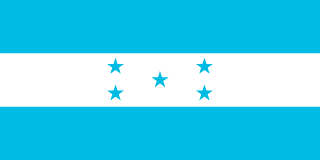
 37 Facts About Honduras Most People Get Wrong
Honduras is home to 10.3M people across 112,492 km², making it a country whose population is spread fairly evenly across its territory. It ranks 1st in the world for Maya.
Below are 37 facts about Honduras, covering history, geography, economy and culture, including several that regularly surprise people who think they already know the country.
37 Facts About Honduras
A complete overview of Honduras's history, geography, economy and culture, covering everything from population and borders to language, climate and travel.
Honduras gave the world the term Banana Republic.
Copan has the most sculptural Maya ruins, including the Hieroglyphic Stairway.
Roatan Island has world-class diving on the Mesoamerican Barrier Reef.
Honduras has the highest murder rate in Central America.
The Hieroglyphic Stairway at Copan contains the longest known Maya hieroglyphic inscription: 62 steps with 2,200 individual glyphs narrating 200 years of royal history.
Honduras's Mesoamerican Barrier Reef, 700 km long, is the world's second-largest coral reef system and one of the most biodiverse marine ecosystems on Earth.
By 1910, United Fruit Company controlled over 1 million acres of Honduran land and more tax revenue than the Honduran government itself.
The 1969 Football War between Honduras and El Salvador lasted only 100 hours but killed around 3,000 people; it was triggered by a World Cup qualifying match but rooted in land disputes.
A forgotten pre-Columbian civilization known as the Lost City of the Monkey God was discovered by LIDAR scanning in Honduras's Mosquitia jungle in 2015.
The Lenca warrior-chief Lempira, for whom the Honduran currency is named, led fierce resistance against Spanish conquest in the 1530s before being killed under a flag of truce.
The Garifuna people, descendants of mixed African and Carib ancestry, have a UNESCO-recognized music, dance, and language tradition along Honduras's Caribbean coast.
Hurricane Mitch in 1998 killed over 7,000 people in Honduras and destroyed 70% of the country's banana and coffee crops.
Honduras's Mosquito Coast was never fully conquered by the Spanish; the Miskito Kingdom remained independent under British protection until the 1890s.
The Rio Platano Biosphere Reserve is the largest intact tropical rainforest in Central America, a UNESCO World Heritage Site home to jaguars, manatees, and tapirs.
Honduras has the highest biodiversity density in Central America; La Tigra cloud forest alone holds 235 bird species, 50 orchid species, and 200 fern species.
Copan was the intellectual capital of the Maya world, producing more sculptors, astronomers, and hieroglyphic scholars than any other Maya city.
Honduras has more than 300 rivers, more than any other Central American country, and major ones like the Patuca remain largely undammed.
Tegucigalpa is one of the few capital cities in the world with no direct railroad connection to any other city in the country.
The Lenca people are one of the few indigenous groups in Central America still speaking their pre-Columbian language and practicing traditional crafts including black-clay pottery.
Honduras's name comes from the Spanish word for depths; Columbus reportedly said the sea was very deep off this coast.
The Bay Islands off Honduras's Caribbean coast were British colonial territories until 1859 and still have an English-speaking Afro-Caribbean population.
Pico Bonito National Park, named for its perfectly cone-shaped peak, receives up to 3,000mm of rain per year and is considered one of the finest birdwatching destinations in Central America.
The 1992 International Court of Justice ruling that finally settled the Honduras-El Salvador border ended one of the longest territorial disputes in the Western Hemisphere.
Honduras is the largest country in Central America that is neither the most populous nor the wealthiest, a paradox driven by geography and its banana-republic economic history.
Palm oil from Honduras's Aguan valley is a major export, though the plantations have been the site of violent land conflicts between corporations and small farmers.
The Garifuna language, spoken by an estimated 100,000 people in Honduras and neighboring countries, is a UNESCO-classified Intangible Cultural Heritage of Humanity.
Honduras is located in Central America, North America, with its capital city in Tegucigalpa.
The population of Honduras is approximately 10.3M, spread across 112,492 km² of territory.
Honduras has a population density of 92/km²: a moderate density for its region.
Honduras has a coastline of 820 km, giving it access to maritime trade, fishing and coastal tourism.
Honduras shares land borders with 3 countries: Guatemala, El Salvador, Nicaragua.
The official language of Honduras is Spanish.
Honduras uses the Honduran Lempira (HNL) as its official currency.
Honduras gained independence in 1821, establishing itself as a sovereign nation in Central America.
The total GDP of Honduras is $31.9B, with a GDP per capita of $3,097, classifying it as a lower-middle-income economy.
Honduras has a tropical coast, temperate highlands climate, with the best time to visit being November–April.
Honduras is considered a Budget destination for travellers, with meals averaging $3–7.
Honduras gave the world the term 'Banana Republic', the United Fruit Company once controlled its economy, politics and infrastructure. The Maya ruins of Copán, with their intricate hieroglyphic staircase, are considered the most sculptural of all Maya sites.
🏆 Honduras World Rankings
Honduras holds several notable world rankings; here is how it compares globally:
Famous Places in Honduras
Honduras is home to several remarkable landmarks and destinations that draw visitors from around the world:
🏛️ Copán Ruins
UNESCO Maya ruins with the Hieroglyphic Stairway, the longest Maya text ever discovered
🐠 Roatán Island
The jewel of the Bay Islands, world-class diving on the Mesoamerican Barrier Reef
🦜 Pico Bonito National Park
A spectacular mountain park with cloud forests, waterfalls and rare quetzal birds
🌿 La Tigra National Park
Cloud forest reserve above Tegucigalpa, first national park in Central America
Frequently Asked Questions About Honduras
What is Honduras famous for?
Honduras gave the world the term 'Banana Republic', the United Fruit Company once controlled its economy, politics and infrastructure. The Maya ruins of Copán, with their intricate hieroglyphic staircase, are considered the most sculptural of all Maya sites.
What is the capital of Honduras?
The capital of Honduras is Tegucigalpa.
What is the population of Honduras?
The population estimate for Honduras is approximately 10.3M.
What language do they speak in Honduras?
The official language of Honduras is Spanish.
When did Honduras become an independent country?
Honduras gained independence in 1821.
What currency does Honduras use?
Honduras uses the Honduran Lempira (HNL).
What is the GDP of Honduras?
Honduras has a GDP of $31.9B, with a GDP per capita of $3,097.
Where is Honduras located?
Honduras is located in Central America, North America.
Is Honduras safe to visit?
Safety conditions in Honduras vary by region. Always check your government's official travel advisory before visiting.
What are some fun facts about Honduras?
Honduras gave the world the term Banana Republic. Copan has the most sculptural Maya ruins, including the Hieroglyphic Stairway. Roatan Island has world-class diving on the Mesoamerican Barrier Reef.
What are some interesting facts about Honduras?
Copan has the most sculptural Maya ruins, including the Hieroglyphic Stairway. Roatan Island has world-class diving on the Mesoamerican Barrier Reef. Honduras has the highest murder rate in Central America.
Honduras facts: what should I know?
Honduras is a country in Central America with a population of 10.3M. Its capital is Tegucigalpa and its official language is Spanish. Honduras gave the world the term Banana Republic.
Explore More About Honduras
Want to explore another country? Generate a random country and discover somewhere new.