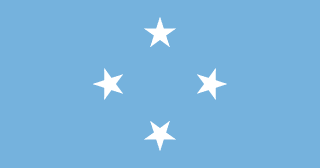
 37 Facts About Micronesia Most People Get Wrong
Micronesia is home to 115K people across 702 km², making it a country whose population is spread fairly evenly across its territory. It ranks 1st in the world for Ocean City.
Below are 37 facts about Micronesia, covering history, geography, economy and culture, including several that regularly surprise people who think they already know the country.
37 Facts About Micronesia
A complete overview of Micronesia's history, geography, economy and culture, covering everything from population and borders to language, climate and travel.
Micronesia consists of 607 islands spread across 2.6 million km² of the Pacific Ocean.
Nan Madol, a city built on artificial islands, is the only ancient city built in the open ocean.
The stone money of Yap island (giant limestone discs) is one of the most unusual currencies ever used.
Truk Lagoon (Chuuk) contains the world's greatest wreck diving, 60 Japanese WWII ships.
The Federated States of Micronesia (FSM) has a Compact of Free Association with the United States, allowing Micronesians to live and work in the US without a visa.
Pohnpei receives over 7,600mm of rain per year, making it one of the wettest places on Earth; some interior peaks receive rain nearly every day.
The Nan Madol complex in Pohnpei, built between 1200-1500 CE, covers 18 km² on 92 artificial islets and required moving an estimated 750,000 tonnes of basalt.
The Yapese stone money retains its value even if it sinks to the ocean floor; ownership is tracked by community oral knowledge, an early form of ledger-based currency.
Truk Lagoon, now called Chuuk Lagoon, was Japan's most important Pacific naval base; Operation Hailstone in 1944 sank 54 Japanese warships in two days.
FSM's total land area is only 702 km², smaller than New York City, but its exclusive economic zone covers 2.6 million km² of ocean.
The Caroline Islands, the historical name for what is now FSM, were successively colonized by Spain, Germany, Japan, and the USA, one of the most complex colonial histories in the Pacific.
Micronesian seafarers are among the greatest navigators in human history, using stars, wave patterns, swells, and bird behavior to sail thousands of kilometers without instruments.
The Satawalese master navigator Mau Piailug taught the crew of the Hokule'a to sail from Hawaii to Tahiti without instruments in 1976, reviving traditional Polynesian navigation.
FSM's outer islands have some of the world's most isolated communities; some atolls receive a supply ship only three or four times per year.
FSM has one of the world's highest rates of diabetes and obesity, driven by a shift from traditional fish, taro, and breadfruit diets to imported processed foods.
Pohnpeian society is organized around a traditional chiefly hierarchy called the Nahnmwarki system, which remains highly respected and influences political decisions alongside democratic government.
Chuuk State in FSM has one of the highest suicide rates among young men in the world, a crisis driven by rapid social change, alcohol, and loss of traditional culture.
Yap is one of the few places where traditional practices, including the men's house meeting system, remain central to daily governance.
FSM receives approximately $130 million per year in US Compact aid, roughly $1,100 per person, making it one of the most aid-dependent nations on Earth.
FSM is one of the most threatened nations by sea level rise; low-lying outer island atolls may become uninhabitable by mid-century.
The traditional outrigger proa of Micronesia, with its asymmetric hull and outrigger float, was one of the fastest sailing vessels of the pre-industrial age, reaching speeds over 20 knots.
Mangrove forests in FSM serve as nurseries for fish, storm buffers, and carbon sinks and are central to climate resilience planning for the islands.
FSM has four states, each with distinct cultures and languages: Yap, Chuuk, Pohnpei, and Kosrae.
The first European to encounter the Caroline Islands was the Portuguese explorer Diogo da Rocha in 1525; the islands were not regularly visited by Europeans for another century.
FSM citizens can serve in the US military under the Compact of Free Association, and Micronesians have one of the highest per-capita rates of US military service of any foreign-affiliated group.
The coral reefs surrounding FSM's islands are among the most biodiverse in the Pacific, forming part of the Coral Triangle, the global center of marine biodiversity.
Micronesia is located in Oceania / Pacific, Oceania, with its capital city in Palikir.
The population of Micronesia is approximately 115K, spread across 702 km² of territory.
Micronesia has a population density of 164/km²: a moderate density for its region.
Micronesia has a coastline of 6,112 km, giving it access to maritime trade, fishing and coastal tourism.
Micronesia is an island nation with no land borders, surrounded entirely by water.
The official language of Micronesia is English, making it straightforward for international visitors to communicate.
Micronesia uses the US Dollar (USD) as its official currency.
Micronesia gained independence in 1986, establishing itself as a sovereign nation in Oceania / Pacific.
The total GDP of Micronesia is $0.4B, with a GDP per capita of $3,478, classifying it as a lower-middle-income economy.
Micronesia has a tropical, hot and humid year-round climate, with the best time to visit being December–April.
Micronesia is considered a Mid destination for travellers, with meals averaging $8–15.
Nan Madol in Micronesia is the only ancient city ever built in the open ocean, a complex of 92 artificial islands built from basalt logs, housing the tombs and temples of the Saudeleur dynasty. It has been called the Venice of the Pacific.
🏆 Micronesia World Rankings
Micronesia holds several notable world rankings; here is how it compares globally:
Famous Places in Micronesia
Micronesia is home to several remarkable landmarks and destinations that draw visitors from around the world:
🏛️ Nan Madol
UNESCO ancient city built on 92 artificial islands in the ocean, the Venice of the Pacific
🤿 Chuuk (Truk) Lagoon
The world's greatest wreck diving site, 60 Japanese WWII warships resting on the ocean floor
🪨 Yap Stone Money
Giant limestone disc 'coins' up to 4m wide, still used in ceremonies today
🌿 Pohnpei Island
A lush volcanic island with dramatic waterfalls, mangroves and sacred stone ruins
Frequently Asked Questions About Micronesia
What is Micronesia famous for?
Nan Madol in Micronesia is the only ancient city ever built in the open ocean, a complex of 92 artificial islands built from basalt logs, housing the tombs and temples of the Saudeleur dynasty. It has been called the Venice of the Pacific.
What is the capital of Micronesia?
The capital of Micronesia is Palikir.
What is the population of Micronesia?
The population estimate for Micronesia is approximately 115K.
What language do they speak in Micronesia?
The official language of Micronesia is English.
When did Micronesia become an independent country?
Micronesia gained independence in 1986.
What currency does Micronesia use?
Micronesia uses the US Dollar (USD).
What is the GDP of Micronesia?
Micronesia has a GDP of $0.4B, with a GDP per capita of $3,478.
Where is Micronesia located?
Micronesia is located in Oceania / Pacific, Oceania.
Is Micronesia safe to visit?
Safety conditions in Micronesia vary by region. Always check your government's official travel advisory before visiting.
What are some fun facts about Micronesia?
Micronesia consists of 607 islands spread across 2.6 million km² of the Pacific Ocean. Nan Madol, a city built on artificial islands, is the only ancient city built in the open ocean. The stone money of Yap island (giant limestone discs) is one of the most unusual currencies ever used.
What are some interesting facts about Micronesia?
Nan Madol, a city built on artificial islands, is the only ancient city built in the open ocean. The stone money of Yap island (giant limestone discs) is one of the most unusual currencies ever used. Truk Lagoon (Chuuk) contains the world's greatest wreck diving, 60 Japanese WWII ships.
Micronesia facts: what should I know?
Micronesia is a country in Oceania / Pacific with a population of 115K. Its capital is Palikir and its official language is English. Micronesia consists of 607 islands spread across 2.6 million km² of the Pacific Ocean.
Explore More About Micronesia
Want to explore another country? Generate a random country and discover somewhere new.