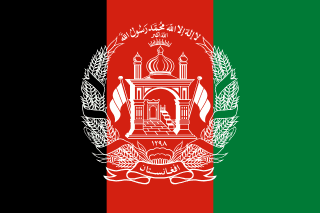
 37 Facts About Afghanistan Most People Get Wrong
Afghanistan is home to 40.1M people across 652,230 km², making it a country whose population is spread fairly evenly across its territory. It ranks 1st in the world for Landlocked.
Below are 37 facts about Afghanistan, covering history, geography, economy and culture, including several that regularly surprise people who think they already know the country.
37 Facts About Afghanistan
A complete overview of Afghanistan's history, geography, economy and culture, covering everything from population and borders to language, climate and travel.
Afghanistan has the world's largest deposits of lithium, potentially worth $1 trillion.
The game of chess is believed to have originated in Afghanistan or nearby regions.
UNODC estimated Afghanistan's opium production at 296 tons in 2025, down 32% from 2024 amid continued enforcement of the cultivation ban and drought conditions.
The Band-e-Amir lakes are among the most stunning natural sites in Central Asia.
The Bamiyan Buddhas, destroyed by the Taliban in 2001, were the world's largest standing Buddhist statues, the taller one 55 meters high and carved into a cliff in the 6th century CE.
Afghanistan sits at the crossroads of the ancient Silk Road; virtually every major civilization from Persia to the Mongol Empire to Alexander the Great passed through or occupied it.
Alexander the Great founded at least four cities in Afghanistan, including Alexandria Arachosia (modern Kandahar) in 329 BCE, and married a Bactrian princess named Roxana from the region.
Mes Aynak in eastern Afghanistan contains one of the world's largest copper deposits alongside the remains of a 2,600-year-old Buddhist monastery complex.
Afghanistan's lapis lazuli mines in Badakhshan have been mined continuously for over 7,000 years; the lapis in Egyptian pharaonic jewelry and Renaissance paintings came from these same mountains.
The Kushan Empire, which controlled Afghanistan from the 1st to 3rd centuries CE, sat at the junction of Silk Road trade and was one of the wealthiest empires of the ancient world.
Bactria, a Greek kingdom centered in northern Afghanistan, created a unique Greco-Buddhist fusion art style found nowhere else on Earth.
The Durand Line, drawn in 1893 by a British colonial official, split the Pashtun people in half and is still at the root of Pakistan-Afghanistan tensions.
Buzkashi, Afghanistan's national sport, involves horsemen fighting over the carcass of a headless goat and is the ancient forerunner of polo.
Afghanistan's Wakhan Corridor, a narrow strip in the northeast created by the British to buffer Russia and British India, is one of the most remote inhabited places on Earth.
The Minaret of Jam, built around 1190 CE, stands 65 meters high in a remote river valley and is one of the finest examples of medieval Islamic architecture.
The Soviet-Afghan War (1979-1989) killed an estimated 1-2 million Afghans, created 5 million refugees, and directly contributed to the dissolution of the Soviet Union.
Afghanistan's Hazara people are believed to be descended from Mongol soldiers left behind after the Mongol conquests and are the country's most persecuted minority.
Pomegranates from Kandahar are considered among the finest in the world and were exported to 25 countries before the 2021 Taliban takeover.
The Taliban's return to power in August 2021 followed a 20-year US war that cost over $2 trillion, the most expensive war per capita in American history.
Afghanistan has no permanent sea access; it is landlocked and borders Pakistan, Iran, Turkmenistan, Uzbekistan, Tajikistan, and China.
The Timurid dynasty based in Herat in the 15th century produced some of the finest manuscripts, poetry, and architecture in Islamic history.
Afghanistan's Band-e-Amir lakes are a series of six deep-blue natural lakes dammed by mineral deposits, now protected as the country's first national park.
The Great Game, the 19th-century rivalry between Britain and Russia for Central Asian dominance, was fought largely in and around Afghanistan, which Britain invaded three times.
The Kabul Museum before the civil war held one of the finest collections of Buddhist and Hellenistic art in the world; much was looted or destroyed between 1992 and 2001.
Afghanistan has the highest child and maternal mortality rates in Asia, with one woman dying in childbirth every two hours according to pre-2021 health data.
Registan Square in Samarkand, one of the most beautiful squares in the Islamic world, was built by the Timurid Empire whose heartland was centered in what is now Afghanistan.
Afghanistan is located in South Asia, Asia, with its capital city in Kabul.
The population of Afghanistan is approximately 40.1M, spread across 652,230 km² of territory.
Afghanistan has a population density of 55/km²: a moderate density for its region.
Afghanistan is a landlocked country with no coastline, relying entirely on neighbouring countries for access to international trade routes.
Afghanistan shares land borders with 6 countries: Pakistan, Iran, Turkmenistan, Uzbekistan, Tajikistan, China.
The official languages of Afghanistan are Dari / Pashto.
Afghanistan uses the Afghani (؋) as its official currency.
Afghanistan gained independence in 1919, establishing itself as a sovereign nation in South Asia.
The total GDP of Afghanistan is $14.6B, with a GDP per capita of $364, classifying it as a developing economy.
Afghanistan has a arid continental, cold winters, hot summers climate, with the best time to visit being March–May, September–November.
Afghanistan is considered a Budget destination for travellers, with meals averaging $2–5.
Afghanistan is home to ancient Silk Road cities and the world's oldest known oil paintings, found in Bamiyan caves. The country has never been fully conquered by a foreign power, earning the nickname 'Graveyard of Empires'.
🏆 Afghanistan World Rankings
Afghanistan holds several notable world rankings; here is how it compares globally:
Famous Places in Afghanistan
Afghanistan is home to several remarkable landmarks and destinations that draw visitors from around the world:
💧 Band-e-Amir
Afghanistan's stunning turquoise crater lakes, the country's first national park
⛰️ Bamiyan Valley
UNESCO site where two ancient giant Buddha statues once stood carved into cliffsides
🕌 Minaret of Jam
A 65-metre UNESCO World Heritage minaret standing alone in a remote mountain valley
🏙️ Kabul Old City
The ancient bazaars and historic architecture of the capital's centuries-old core
Frequently Asked Questions About Afghanistan
What is Afghanistan famous for?
Afghanistan is home to ancient Silk Road cities and the world's oldest known oil paintings, found in Bamiyan caves. The country has never been fully conquered by a foreign power, earning the nickname 'Graveyard of Empires'.
What is the capital of Afghanistan?
The capital of Afghanistan is Kabul.
What is the population of Afghanistan?
The population estimate for Afghanistan is approximately 40.1M.
What language do they speak in Afghanistan?
The official languages of Afghanistan are Dari / Pashto.
When did Afghanistan become an independent country?
Afghanistan gained independence in 1919.
What currency does Afghanistan use?
Afghanistan uses the Afghani (؋).
What is the GDP of Afghanistan?
Afghanistan has a GDP of $14.6B, with a GDP per capita of $364.
Where is Afghanistan located?
Afghanistan is located in South Asia, Asia.
Is Afghanistan safe to visit?
Safety conditions in Afghanistan vary by region. Always check your government's official travel advisory before visiting.
What are some fun facts about Afghanistan?
Afghanistan has the world's largest deposits of lithium, potentially worth $1 trillion. The game of chess is believed to have originated in Afghanistan or nearby regions. UNODC estimated Afghanistan's opium production at 296 tons in 2025, down 32% from 2024 amid continued enforcement of the cultivation ban and drought conditions.
What are some interesting facts about Afghanistan?
The game of chess is believed to have originated in Afghanistan or nearby regions. UNODC estimated Afghanistan's opium production at 296 tons in 2025, down 32% from 2024 amid continued enforcement of the cultivation ban and drought conditions. The Band-e-Amir lakes are among the most stunning natural sites in Central Asia.
Afghanistan facts: what should I know?
Afghanistan is a country in South Asia with a population of 40.1M. Its capital is Kabul and its official language is Dari / Pashto. Afghanistan has the world's largest deposits of lithium, potentially worth $1 trillion.
Explore More About Afghanistan
Want to explore another country? Generate a random country and discover somewhere new.