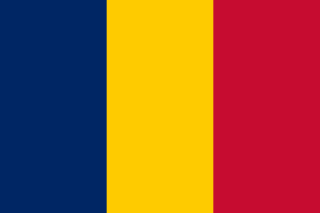
 37 Facts About Chad Most People Get Wrong
Chad is home to 17.4M people across 1,284,000 km², making it a country with vast stretches of open, largely empty land. It ranks 1st in the world for Lake Chad.
Below are 37 facts about Chad, covering history, geography, economy and culture, including several that regularly surprise people who think they already know the country.
37 Facts About Chad
A complete overview of Chad's history, geography, economy and culture, covering everything from population and borders to language, climate and travel.
A 7-million-year-old human ancestor skull was found in Chad.
Lake Chad has shrunk by 90% due to climate change and water use.
The Ennedi Massif has thousands of prehistoric rock paintings.
Chad is one of the world's least developed countries.
The skull found in Chad, named Toumai (meaning Hope of Life), may represent the oldest known ancestor of the human lineage ever discovered.
Lake Chad at its peak in the 1960s was the fourth largest lake in Africa; it has now shrunk to less than one-tenth of its former size, directly affecting 30 million people.
The Ennedi Massif's rock paintings, some over 7,000 years old, depict animals and humans from when the Sahara was green and fertile.
Chad has over 200 distinct ethnic groups and more than 120 languages, making it one of the most linguistically diverse countries in Africa.
Zakouma National Park is one of Africa's greatest conservation success stories: elephant populations grew from 450 in 2010 to over 1,000 by 2020 due to anti-poaching efforts.
Chad is one of the world's largest producers of natron (sodium carbonate), a natural mineral salt used in food preservation, soap-making, and livestock feed.
The ancient Kanem-Bornu Empire, centered on the Lake Chad basin, was one of the longest-lived empires in African history, existing from the 9th to 19th centuries.
The Sahara Desert covers the northern two-thirds of Chad, while the south is fertile savanna, creating some of the starkest geographical contrasts of any country on Earth.
Chad is landlocked and one of the largest such countries in the world; its nearest coastline is over 1,500 km away in Cameroon.
Chad holds substantial oil reserves; production began in 2003 via a World Bank-financed pipeline to Cameroon, the first major oil export infrastructure in Central Africa.
Idriss Deby ruled Chad for 30 years until 2021, when he was killed in battle the day after winning his sixth presidential election.
The Chari River, which feeds Lake Chad, supports dense populations of hippos, crocodiles, and waterbirds in southern Chad.
Traditional sultanates, including the Sultan of Baguirmi and the Sultan of Ouaddai, still maintain significant ceremonial and social authority in eastern Chad.
Chad has been in near-continuous civil conflict since independence in 1960, fighting rebellions, coups, and cross-border wars with Libya.
The Ouaddai Sultanate in eastern Chad resisted French conquest longer than any other state in the region, only falling in 1909.
Chad's northern Tibesti Mountains, the highest range in the Sahara, reach 3,415 meters and are home to the Toubou people, some of the Sahara's most skilled desert warriors.
N'Djamena, Chad's capital, sits at the confluence of the Chari and Logone rivers and was founded by French colonizers in 1900 as Fort-Lamy.
The Battle of N'Djamena in 2008, when rebel forces advanced to the capital's streets in pick-up trucks, nearly toppled the government and shocked regional observers.
Chad is one of the few countries spanning both the Sahara and the Congo Basin ecological zones, supporting remarkable biodiversity despite extreme aridity in the north.
French and Arabic are co-official languages of Chad, but Sara, Kanuri, and Maba are more widely spoken in daily life across different regions.
Chad has no traditional rail network; dirt roads that become impassable during the rainy season are the main connection between its vast regions.
Lake Chad was once navigated by large cargo boats; today in some areas it is shallow enough to walk across, illustrating one of the world's most dramatic environmental collapses.
Chad is located in Central Africa, Africa, with its capital city in N'Djamena.
The population of Chad is approximately 17.4M, spread across 1,284,000 km² of territory.
Chad has a population density of 14/km²: one of the most sparsely populated countries on Earth.
Chad is a landlocked country with no coastline, relying entirely on neighbouring countries for access to international trade routes.
Chad shares land borders with 6 countries: Libya, Sudan, Central African Republic, Nigeria, Niger, Cameroon.
The official languages of Chad are French / Arabic.
Chad uses the Central African CFA Franc (XAF) as its official currency.
Chad gained independence in 1960, establishing itself as a sovereign nation in Central Africa.
The total GDP of Chad is $11.8B, with a GDP per capita of $678, classifying it as a developing economy.
Chad has a hot desert north, tropical south climate, with the best time to visit being November–February.
Chad is considered a Budget destination for travellers, with meals averaging $2–6.
A 7-million-year-old skull found in Chad, named Toumaï, may be the earliest known ancestor of humans. The Ennedi Massif in northern Chad contains thousands of prehistoric rock paintings and natural rock arches.
🏆 Chad World Rankings
Chad holds several notable world rankings; here is how it compares globally:
Famous Places in Chad
Chad is home to several remarkable landmarks and destinations that draw visitors from around the world:
🪨 Ennedi Massif
UNESCO dramatic sandstone plateau with natural arches, rock art and prehistoric cave paintings
🌊 Lake Chad
A once-vast lake that has shrunk by 90%, a powerful symbol of climate change in Africa
🐘 Zakouma National Park
One of Central Africa's last great wildlife sanctuaries, elephants, lions and hundreds of bird species
🏔️ Tibesti Mountains
A remote volcanic massif in the central Sahara with the highest peaks in the desert
Frequently Asked Questions About Chad
What is Chad famous for?
A 7-million-year-old skull found in Chad, named Toumaï, may be the earliest known ancestor of humans. The Ennedi Massif in northern Chad contains thousands of prehistoric rock paintings and natural rock arches.
What is the capital of Chad?
The capital of Chad is N'Djamena.
What is the population of Chad?
The population estimate for Chad is approximately 17.4M.
What language do they speak in Chad?
The official languages of Chad are French / Arabic.
When did Chad become an independent country?
Chad gained independence in 1960.
What currency does Chad use?
Chad uses the Central African CFA Franc (XAF).
What is the GDP of Chad?
Chad has a GDP of $11.8B, with a GDP per capita of $678.
Where is Chad located?
Chad is located in Central Africa, Africa.
Is Chad safe to visit?
Safety conditions in Chad vary by region. Always check your government's official travel advisory before visiting.
What are some fun facts about Chad?
A 7-million-year-old human ancestor skull was found in Chad. Lake Chad has shrunk by 90% due to climate change and water use. The Ennedi Massif has thousands of prehistoric rock paintings.
What are some interesting facts about Chad?
Lake Chad has shrunk by 90% due to climate change and water use. The Ennedi Massif has thousands of prehistoric rock paintings. Chad is one of the world's least developed countries.
Chad facts: what should I know?
Chad is a country in Central Africa with a population of 17.4M. Its capital is N'Djamena and its official language is French / Arabic. A 7-million-year-old human ancestor skull was found in Chad.
Explore More About Chad
Want to explore another country? Generate a random country and discover somewhere new.