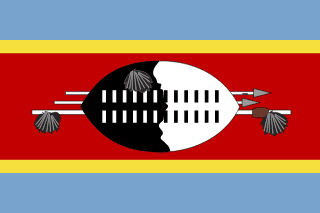
 37 Facts About Eswatini Most People Get Wrong
Eswatini is home to 1.2M people across 17,364 km², making it a country whose population is spread fairly evenly across its territory. It ranks 1st in the world for Absolute Monarchy.
Below are 37 facts about Eswatini, covering history, geography, economy and culture, including several that regularly surprise people who think they already know the country.
37 Facts About Eswatini
A complete overview of Eswatini's history, geography, economy and culture, covering everything from population and borders to language, climate and travel.
Eswatini (formerly Swaziland) is one of the world's last absolute monarchies.
The Umhlanga Reed Dance sees 80,000 maidens present reeds to the Queen Mother.
The country changed its name from Swaziland to eSwatini in 2018.
Eswatini is completely surrounded by South Africa and Mozambique.
Eswatini is the last absolute monarchy in sub-Saharan Africa; King Mswati III has ruled since 1986 with supreme authority over the government, judiciary, and legislature.
Political parties are banned in Eswatini; the traditional Tinkhundla system based on royal patronage and chiefs governs political life instead of a party system.
Eswatini has the world's highest HIV/AIDS prevalence rate at approximately 27% of the adult population, the highest of any country and a devastating national crisis.
The Incwala ceremony, Eswatini's most sacred annual ritual, takes place over several weeks and involves the king symbolically eating the first fruits of the harvest; it is forbidden to foreigners.
King Mswati III has 15 wives and over 25 children; new wives are sometimes selected at the Umhlanga Reed Dance ceremony.
Eswatini's Hlane Royal National Park was restocked with lions and white rhinos from South Africa, making it one of the few places in the country where these animals now live.
Despite its small size (17,000 km²), Eswatini has three distinct climate zones: the cool Highveld in the west, the Middleveld, and the hot semi-arid Lowveld in the east.
Eswatini produces high-quality sugar cane, citrus, and wood pulp, and has one of the most developed agricultural sectors relative to size in southern Africa.
The Swazi nation avoided formal colonization by playing British and Boer interests against each other; though a British protectorate from 1903, it maintained more autonomy than most African territories.
Eswatini is one of the few African countries to diplomatically recognize Taiwan over the People's Republic of China, making it politically unique on the continent.
The 2021 pro-democracy protests in Eswatini were violently suppressed; at least 80 people were killed when security forces fired on crowds demanding political reforms.
Eswatini's Malolotja Nature Reserve contains one of the world's oldest known mining sites: iron ore was extracted from Lion Cavern around 43,000 years ago.
The country's name Eswatini means Land of the Swazis in siSwati; King Mswati III renamed it on the 50th anniversary of independence to drop the colonial name Swaziland.
Swazi crafts including hand-woven baskets and candles from the Swazi Candles workshop at Malkerns are among the finest traditional crafts in southern Africa and are exported worldwide.
Eswatini has a median age of just 21 years; the combination of high HIV/AIDS mortality and high birth rates creates a demographic structure unlike most other countries.
Eswatini's textile and garment factories, taking advantage of preferential US trade access under AGOA, have made the country a significant manufacturer of clothing for American brands.
The Swazi royal family owns significant commercial interests including breweries, hotels, and media companies, making the monarchy economically as well as politically dominant.
Eswatini's independence from Britain in 1968 was one of the most peaceful transitions in Africa; there was no armed independence struggle.
The Ezulwini Valley, known as the Valley of Heaven, is Eswatini's cultural heartland, containing the royal palace, national stadium, and traditional craft markets.
Eswatini's Pigg's Peak gold mine, opened in the 1880s, was one of the first major gold discoveries in southern Africa.
Eswatini is the only country in the world to have adopted a constitution that formally concentrates all state power in a hereditary monarch in the post-colonial era.
Traditional Swazi ceremonies including Incwala and Umhlanga Reed Dance attract tens of thousands of participants and are among the most spectacular royal rituals still practiced anywhere in the world.
Eswatini is located in Southern Africa, Africa, with its capital city in Mbabane.
The population of Eswatini is approximately 1.2M, spread across 17,364 km² of territory.
Eswatini has a population density of 69/km²: a moderate density for its region.
Eswatini is a landlocked country with no coastline, relying entirely on neighbouring countries for access to international trade routes.
Eswatini shares land borders with 2 countries: South Africa, Mozambique.
The official languages of Eswatini are Swati / English, making it straightforward for international visitors to communicate.
Eswatini uses the Swazi Lilangeni (SZL) as its official currency.
Eswatini gained independence in 1968, establishing itself as a sovereign nation in Southern Africa.
The total GDP of Eswatini is $4.8B, with a GDP per capita of $4,000, classifying it as a lower-middle-income economy.
Eswatini has a subtropical, dry season may–september climate, with the best time to visit being May–September.
Eswatini is considered a Budget destination for travellers, with meals averaging $4–8.
Eswatini (formerly Swaziland) is one of the world's last absolute monarchies, ruled by King Mswati III. Each year, the Umhlanga Reed Dance sees up to 80,000 young women present reeds to the Queen Mother in a spectacular traditional ceremony.
🏆 Eswatini World Rankings
Eswatini holds several notable world rankings; here is how it compares globally:
Famous Places in Eswatini
Eswatini is home to several remarkable landmarks and destinations that draw visitors from around the world:
🦁 Hlane Royal National Park
Eswatini's largest park, white rhinos, lions, elephants and hippos in pristine bush
🦛 Mlilwane Wildlife Sanctuary
Eswatini's first protected area, a tranquil reserve where hippos graze freely
🪨 Sibebe Rock
The world's second largest exposed granite dome, 350m of smooth bare rock
👑 Lobamba Royal Village
The traditional and legislative capital, site of royal ceremonies and national museums
Frequently Asked Questions About Eswatini
What is Eswatini famous for?
Eswatini (formerly Swaziland) is one of the world's last absolute monarchies, ruled by King Mswati III. Each year, the Umhlanga Reed Dance sees up to 80,000 young women present reeds to the Queen Mother in a spectacular traditional ceremony.
What is the capital of Eswatini?
The capital of Eswatini is Mbabane.
What is the population of Eswatini?
The population estimate for Eswatini is approximately 1.2M.
What language do they speak in Eswatini?
The official languages of Eswatini are Swati / English.
When did Eswatini become an independent country?
Eswatini gained independence in 1968.
What currency does Eswatini use?
Eswatini uses the Swazi Lilangeni (SZL).
What is the GDP of Eswatini?
Eswatini has a GDP of $4.8B, with a GDP per capita of $4,000.
Where is Eswatini located?
Eswatini is located in Southern Africa, Africa.
Is Eswatini safe to visit?
Safety conditions in Eswatini vary by region. Always check your government's official travel advisory before visiting.
What are some fun facts about Eswatini?
Eswatini (formerly Swaziland) is one of the world's last absolute monarchies. The Umhlanga Reed Dance sees 80,000 maidens present reeds to the Queen Mother. The country changed its name from Swaziland to eSwatini in 2018.
What are some interesting facts about Eswatini?
The Umhlanga Reed Dance sees 80,000 maidens present reeds to the Queen Mother. The country changed its name from Swaziland to eSwatini in 2018. Eswatini is completely surrounded by South Africa and Mozambique.
Eswatini facts: what should I know?
Eswatini is a country in Southern Africa with a population of 1.2M. Its capital is Mbabane and its official language is Swati / English. Eswatini (formerly Swaziland) is one of the world's last absolute monarchies.
Explore More About Eswatini
Want to explore another country? Generate a random country and discover somewhere new.