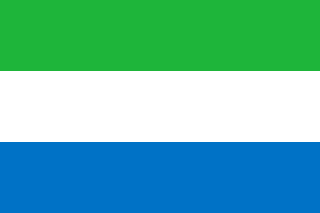
 37 Facts About Sierra Leone Most People Get Wrong
Sierra Leone is home to 8.1M people across 71,740 km², making it a country whose population is spread fairly evenly across its territory. It ranks 1st in the world for Diamonds.
Below are 37 facts about Sierra Leone, covering history, geography, economy and culture, including several that regularly surprise people who think they already know the country.
37 Facts About Sierra Leone
A complete overview of Sierra Leone's history, geography, economy and culture, covering everything from population and borders to language, climate and travel.
Sierra Leone means Lion Mountains in Portuguese.
Sierra Leone has some of West Africa's most beautiful and uncrowded beaches.
The Blood Diamond trade that inspired the 2006 film originated in Sierra Leone.
Freetown was founded as a home for freed slaves in 1787.
Freetown's Cotton Tree, a centuries-old ceiba tree in the center of the capital, is a national symbol; freed slaves gathered beneath it upon their arrival in 1792.
Sierra Leone has one of the highest concentrations of diamonds in the world; a single kimberlite pipe near Koidu has produced millions of carats of gem-quality stones.
Fourah Bay College in Freetown, founded in 1827, was the first Western-style university in sub-Saharan Africa and was known as the Athens of West Africa.
The Bunce Island slave fort off Freetown harbor was a major British slave-trading post; historians estimate 12,000-13,000 enslaved Africans passed through it.
The 2014-2016 Ebola outbreak killed over 11,000 people across Guinea, Liberia, and Sierra Leone, devastating the region's economies and healthcare systems.
The Tiwai Island Wildlife Sanctuary has one of the highest densities of primates in the world, including pygmy hippos and Diana monkeys.
Sierra Leone had the world's lowest life expectancy as recently as 2000 at 38 years; decades of reform have since pushed it above 60.
The phrase blood diamonds entered global public consciousness because of Sierra Leone's civil war, leading to the 2003 Kimberley Process international certification scheme.
Sierra Leone's Loma Mansa, at 1,945 meters, is the highest peak in the country and one of the highest in West Africa.
Sierra Leone has a wet season so extreme that Freetown receives up to 3,800mm of rain per year, one of the wettest capitals in Africa.
The country's 1991-2002 civil war, featuring the RUF rebel group notorious for mass amputations, is considered one of the most brutal conflicts in modern African history.
The Mende and Temne peoples are Sierra Leone's largest ethnic groups, each with distinct languages and cultural traditions, together comprising about 60% of the population.
Traditional Poro and Sande initiation societies of Sierra Leone are among the most important cultural institutions in West Africa, responsible for transmitting law, history, and skills to the next generation.
The Tacugama Chimpanzee Sanctuary near Freetown has rescued and rehabilitated hundreds of orphaned chimps and is one of Africa's most important primate conservation programs.
Sierra Leone held its first free and fair elections in 1996, electing Ahmad Tejan Kabbah as president, a pivotal moment after decades of military rule.
Sierra Leone's kola nuts were so prized in trade that they gave their name to Coca-Cola's original recipe, which contained kola extract alongside coca leaf.
The Sierra Leone River estuary, where Freetown sits, is one of the finest natural harbors on the West African coast, which is why British colonizers chose it.
Sherbro Island, off the southern coast, was once called the Liverpool of West Africa by 19th-century merchants for its trading importance.
Sierra Leone was among the first countries to grant women the right to vote in sub-Saharan Africa, in 1961.
The African black-and-white colobus monkey, a striking primate with long flowing white fur, is found in Sierra Leone's Outamba-Kilimi National Park.
Sierra Leone produced a celebrated tradition of krio literature and journalism in Freetown, influencing West African writing more broadly in the 19th and 20th centuries.
The country's name was given by Portuguese explorer Pedro de Sintra, who described the shape of the mountains from the sea as resembling a lion.
Sierra Leone is located in West Africa, Africa, with its capital city in Freetown.
The population of Sierra Leone is approximately 8.1M, spread across 71,740 km² of territory.
Sierra Leone has a population density of 113/km²: a moderate density for its region.
Sierra Leone has a coastline of 402 km, giving it access to maritime trade, fishing and coastal tourism.
Sierra Leone shares land borders with 2 countries: Guinea, Liberia.
The official language of Sierra Leone is English, making it straightforward for international visitors to communicate.
Sierra Leone uses the Sierra Leonean Leone (SLL) as its official currency.
Sierra Leone gained independence in 1961, establishing itself as a sovereign nation in West Africa.
The total GDP of Sierra Leone is $4.1B, with a GDP per capita of $506, classifying it as a developing economy.
Sierra Leone has a tropical, dry season november–april climate, with the best time to visit being November–April.
Sierra Leone is considered a Budget destination for travellers, with meals averaging $2–6.
Sierra Leone's name means Lion Mountains in Portuguese, named by Portuguese explorer Pedro de Sintra in 1462. The country has some of West Africa's most beautiful beaches and was a major destination for freed slaves returning from America and Britain.
🏆 Sierra Leone World Rankings
Sierra Leone holds several notable world rankings; here is how it compares globally:
Famous Places in Sierra Leone
Sierra Leone is home to several remarkable landmarks and destinations that draw visitors from around the world:
🌳 Freetown Cotton Tree
A 500-year-old cotton tree where freed slaves gave thanks, the most important symbol in Sierra Leone
🐒 Tacugama Chimpanzee Sanctuary
A rescue sanctuary for orphaned chimpanzees just outside Freetown
🌿 Tiwai Island
A wildlife sanctuary on a river island, one of the highest primate densities in the world
🏝️ Banana Islands
Three pristine islands off Freetown with coral reefs, turtles and colonial ruins
Frequently Asked Questions About Sierra Leone
What is Sierra Leone famous for?
Sierra Leone's name means Lion Mountains in Portuguese, named by Portuguese explorer Pedro de Sintra in 1462. The country has some of West Africa's most beautiful beaches and was a major destination for freed slaves returning from America and Britain.
What is the capital of Sierra Leone?
The capital of Sierra Leone is Freetown.
What is the population of Sierra Leone?
The population estimate for Sierra Leone is approximately 8.1M.
What language do they speak in Sierra Leone?
The official language of Sierra Leone is English.
When did Sierra Leone become an independent country?
Sierra Leone gained independence in 1961.
What currency does Sierra Leone use?
Sierra Leone uses the Sierra Leonean Leone (SLL).
What is the GDP of Sierra Leone?
Sierra Leone has a GDP of $4.1B, with a GDP per capita of $506.
Where is Sierra Leone located?
Sierra Leone is located in West Africa, Africa.
Is Sierra Leone safe to visit?
Safety conditions in Sierra Leone vary by region. Always check your government's official travel advisory before visiting.
What are some fun facts about Sierra Leone?
Sierra Leone means Lion Mountains in Portuguese. Sierra Leone has some of West Africa's most beautiful and uncrowded beaches. The Blood Diamond trade that inspired the 2006 film originated in Sierra Leone.
What are some interesting facts about Sierra Leone?
Sierra Leone has some of West Africa's most beautiful and uncrowded beaches. The Blood Diamond trade that inspired the 2006 film originated in Sierra Leone. Freetown was founded as a home for freed slaves in 1787.
Sierra Leone facts: what should I know?
Sierra Leone is a country in West Africa with a population of 8.1M. Its capital is Freetown and its official language is English. Sierra Leone means Lion Mountains in Portuguese.
Explore More About Sierra Leone
Want to explore another country? Generate a random country and discover somewhere new.