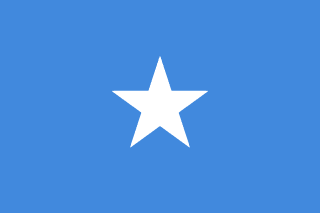
 37 Facts About Somalia Most People Get Wrong
Somalia is home to 17.1M people across 637,657 km², making it a country with vast stretches of open, largely empty land. It ranks 1st in the world for Coastline.
Below are 37 facts about Somalia, covering history, geography, economy and culture, including several that regularly surprise people who think they already know the country.
37 Facts About Somalia
A complete overview of Somalia's history, geography, economy and culture, covering everything from population and borders to language, climate and travel.
Somalia has the longest coastline in mainland Africa at 3,333km.
Somalia has the world's largest camel population.
The ancient Land of Punt, Egypt's trading partner, is believed to be in Somalia.
Somaliland, a breakaway region, functions as a stable de facto state.
Somalia's Berbera deep-water port on the Gulf of Aden is strategically located equidistant between the Suez Canal and the Strait of Hormuz.
The Somali language was not given a formal written script until 1972, despite having one of the richest oral poetry traditions in the world; Somali poetry called gabay is considered a major art form.
The Battle of Mogadishu in 1993, the Black Hawk Down incident, killed 18 American soldiers and approximately 700 Somalis and led directly to the US withdrawal from peacekeeping in Africa.
Somalia's Gulf of Aden piracy crisis reached its peak in 2010-2011 with over 140 ships attacked in a year; Somali pirates were holding $238 million in ransoms simultaneously.
Somaliland has maintained peace, held democratic elections, and functioned as a de facto state since 1991, yet has never been recognized by any other country.
The Somali diaspora numbers over 2 million people abroad, with large communities in Minnesota, London, and Toronto.
Mogadishu, now famous as a failed-state capital, was once known as the White Pearl of the Indian Ocean for its beautiful coastal architecture.
Somalia's civil war, which began with the collapse of the Siad Barre government in 1991, is one of the world's longest-running conflicts, now in its fourth decade.
The Laas Geel cave complex in Somaliland contains some of the best-preserved prehistoric rock paintings in all of Africa, dating back 5,000-11,000 years.
The traditional Somali banking network, the hawala system, allowed money transfers to function even during total collapse of formal banking; Somali diaspora remittances reached $1.4 billion in 2019.
Al-Shabaab collects more tax revenue from markets and businesses under its control than the recognized Somali federal government does in many regions.
Somalia has 3,333 km of coastline on the Indian Ocean and Gulf of Aden, yet has virtually no domestic fishing industry; most fish are caught by foreign fleets.
The Xeer Somali customary law system, a set of oral legal contracts between clans, predates Islam in Somalia and still governs many disputes more effectively than the formal state.
Siad Barre ruled Somalia from 1969 to 1991 and was one of the Cold War's most dramatic ideological flip-floppers, switching allegiance from the Soviet Union to the United States in the late 1970s.
Puntland has operated as a semi-autonomous administration with its own president, parliament, and security forces, a model of decentralized governance within the failed state.
The Somali wild ass has fewer than 700 individuals surviving in northeastern Somalia, making it one of the rarest mammals on Earth.
Somalia has one of the world's highest rates of female genital mutilation; UNICEF estimates that 98% of Somali women have undergone the procedure.
Ancient Somalia traded frankincense, myrrh, gold, and exotic animals with ancient Egypt for over 3,000 years; the earliest recorded expedition dates to 2500 BCE.
The Somalia-based concept of dhoobato, meaning one who refuses to give up, is a cultural ideal that reflects the resilience forged by centuries of hardship.
The Somali language is spoken by approximately 25 million people and is notable for having a highly complex system of gender, case, and tonal distinctions.
Kismayo, Somalia's third-largest city, has changed hands between government forces, Al-Shabaab, and various militias multiple times since 1991.
Somalia's remarkable cultural coherence, with a single language, religion, and ethnic group, makes it unique in Africa and yet has not prevented decades of clan-based civil war.
Somalia is located in East Africa, Africa, with its capital city in Mogadishu.
The population of Somalia is approximately 17.1M, spread across 637,657 km² of territory.
Somalia has a population density of 27/km²: a moderate density for its region.
Somalia has a coastline of 3,333 km, giving it access to maritime trade, fishing and coastal tourism.
Somalia shares land borders with 3 countries: Djibouti, Ethiopia, Kenya.
The official languages of Somalia are Somali / Arabic.
Somalia uses the Somali Shilling (SOS) as its official currency.
Somalia gained independence in 1960, establishing itself as a sovereign nation in East Africa.
The total GDP of Somalia is $8.0B, with a GDP per capita of $468, classifying it as a developing economy.
Somalia has a hot desert and semi-arid, two rainy seasons climate, with the best time to visit being December–March.
Somalia is considered a Budget destination for travellers, with meals averaging $2–6.
Somalia has the longest coastline of any country in mainland Africa at 3,333km. The ancient Land of Punt, mentioned in Egyptian records as the source of gold, ivory and frankincense, is believed to have been located in modern Somalia.
🏆 Somalia World Rankings
Somalia holds several notable world rankings; here is how it compares globally:
Famous Places in Somalia
Somalia is home to several remarkable landmarks and destinations that draw visitors from around the world:
🎨 Laas Geel Cave Paintings
Some of the oldest and best-preserved rock art in Africa, cattle paintings dating to 9,000–3,000 BC
🏛️ Mogadishu Old Town
Ancient port city with Arab-influenced architecture, one of East Africa's oldest trading hubs
🌊 Hobyo
A coastal town with dramatic sand dunes tumbling into the Indian Ocean
✈️ Hargeisa
The capital of the self-declared state of Somaliland, an MiG fighter jet displayed in the main roundabout
Frequently Asked Questions About Somalia
What is Somalia famous for?
Somalia has the longest coastline of any country in mainland Africa at 3,333km. The ancient Land of Punt, mentioned in Egyptian records as the source of gold, ivory and frankincense, is believed to have been located in modern Somalia.
What is the capital of Somalia?
The capital of Somalia is Mogadishu.
What is the population of Somalia?
The population estimate for Somalia is approximately 17.1M.
What language do they speak in Somalia?
The official languages of Somalia are Somali / Arabic.
When did Somalia become an independent country?
Somalia gained independence in 1960.
What currency does Somalia use?
Somalia uses the Somali Shilling (SOS).
What is the GDP of Somalia?
Somalia has a GDP of $8.0B, with a GDP per capita of $468.
Where is Somalia located?
Somalia is located in East Africa, Africa.
Is Somalia safe to visit?
Safety conditions in Somalia vary by region. Always check your government's official travel advisory before visiting.
What are some fun facts about Somalia?
Somalia has the longest coastline in mainland Africa at 3,333km. Somalia has the world's largest camel population. The ancient Land of Punt, Egypt's trading partner, is believed to be in Somalia.
What are some interesting facts about Somalia?
Somalia has the world's largest camel population. The ancient Land of Punt, Egypt's trading partner, is believed to be in Somalia. Somaliland, a breakaway region, functions as a stable de facto state.
Somalia facts: what should I know?
Somalia is a country in East Africa with a population of 17.1M. Its capital is Mogadishu and its official language is Somali / Arabic. Somalia has the longest coastline in mainland Africa at 3,333km.
Explore More About Somalia
Want to explore another country? Generate a random country and discover somewhere new.