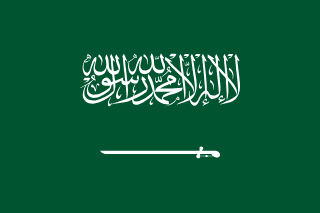
 37 Facts About Saudi Arabia Most People Get Wrong
Saudi Arabia is home to 35.9M people across 2,149,690 km², making it a country with vast stretches of open, largely empty land. It ranks 1st in the world for Oil Export.
Below are 37 facts about Saudi Arabia, covering history, geography, economy and culture, including several that regularly surprise people who think they already know the country.
37 Facts About Saudi Arabia
A complete overview of Saudi Arabia's history, geography, economy and culture, covering everything from population and borders to language, climate and travel.
Saudi Arabia is the birthplace of Islam and home to its two holiest cities.
Saudi Arabia has the world's second largest proven oil reserves.
Saudi Arabia is the world's largest oil exporter.
The country has no rivers, all water comes from desalination or underground aquifers.
Mecca is the birthplace of the Prophet Muhammad (570 CE) and is forbidden to non-Muslims; over 2.5 million pilgrims descend on it annually for the Hajj.
Saudi Arabia's Aramco is the world's most profitable company; in 2022 it earned $161 billion in net income, more than Apple, Microsoft, and Google combined.
The Empty Quarter (Rub al Khali) is the world's largest continuous sand desert, covering 650,000 km² with dunes reaching 250 meters high.
Saudi Arabia's AlUla region contains Hegra (Madain Saleh), Nabataean rock-carved tombs rivaling Petra in Jordan and now open to international tourists.
Women in Saudi Arabia were only granted the right to drive in 2018; campaigners for this right were imprisoned.
The Grand Mosque in Mecca is the largest mosque in the world, capable of holding over 2 million worshippers simultaneously during Hajj.
Saudi Arabia produces about 70% of its fresh water through desalination, making it the world's largest producer of desalinated water.
Saudi Arabia controls roughly 17% of the world's proven petroleum reserves and has been the largest single oil exporter since the early 1970s.
Vision 2030, launched by Crown Prince Mohammed bin Salman in 2016, aims to diversify the economy away from oil through tourism, entertainment, and technology.
NEOM is a planned $500 billion futuristic city in northwest Saudi Arabia that includes The Line, a proposed 170-km linear city designed for 9 million residents with no cars.
Saudi Arabia was officially founded as a modern state only in 1932 when Ibn Saud unified the Arabian Peninsula after decades of tribal conquest.
The Masmak Fortress in Riyadh, a mud-brick citadel from the 19th century, is where Ibn Saud's 1902 raid began the reconquest that eventually created Saudi Arabia.
Saudi Arabia is the world's largest importer of arms; between 2016 and 2020 it was the top global arms buyer, purchasing primarily from the US and UK.
The Asir Mountains in southwestern Saudi Arabia receive enough rainfall to support terraced agriculture and cloud forests that look nothing like the stereotypical Arabian desert.
Saudi Arabia has built over 1,600 desalination facilities and uses more desalinated water per capita than any other nation on Earth.
The Qatif and Al-Ahsa oases in eastern Saudi Arabia have been continuously inhabited for over 5,000 years and produce some of the finest dates in the Arabian Peninsula.
The diplomatic and religious power of controlling Mecca and Medina gives Saudi Arabia disproportionate soft power throughout the 1.8 billion-strong global Muslim community.
Saudi Arabia's ancient trade city of Diriyah, birthplace of the Saudi royal family's founding dynasty, is being restored as a $1 billion heritage destination outside Riyadh.
The ancient rock art site of Hail in northwestern Saudi Arabia contains tens of thousands of petroglyphs depicting camels, horses, and hunting scenes dating back 10,000 years.
Saudi Arabia controls the world's longest offshore oil loading pier (Sea Island Terminal at 10.5 km), allowing supertankers to load without entering shallow coastal waters.
The Kaaba in Mecca, draped in black silk embroidered with gold, is the most visited site on Earth and the direction toward which 1.8 billion Muslims pray five times daily.
Saudi Arabia has virtually no history of agriculture; it transformed into a modern state almost entirely on the strength of oil revenues discovered in 1938.
Saudi Arabia is located in Middle East, Asia, with its capital city in Riyadh.
The population of Saudi Arabia is approximately 35.9M, spread across 2,149,690 km² of territory.
Saudi Arabia has a population density of 17/km²: one of the most sparsely populated countries on Earth.
Saudi Arabia has a coastline of 2,640 km, giving it access to maritime trade, fishing and coastal tourism.
Saudi Arabia shares land borders with 7 countries: Jordan, Iraq, Kuwait, Qatar, United Arab Emirates, Oman, Yemen.
The official language of Saudi Arabia is Arabic.
Saudi Arabia uses the Riyal (SAR) as its official currency.
Saudi Arabia gained independence in 1932, establishing itself as a sovereign nation in Middle East.
The total GDP of Saudi Arabia is $1.06T, with a GDP per capita of $29,540, classifying it as a upper-middle-income economy.
Saudi Arabia has a hot desert, extreme heat in summer climate, with the best time to visit being November–March.
Saudi Arabia is considered a Mid–Expensive destination for travellers, with meals averaging $5–15.
Saudi Arabia sits on top of roughly 17% of the world's proven oil reserves. It is the custodian of Islam's two holiest sites, Mecca and Medina, receiving over 10 million pilgrims during the annual Hajj, the world's largest annual gathering of people.
🏆 Saudi Arabia World Rankings
Saudi Arabia holds several notable world rankings; here is how it compares globally:
Famous Places in Saudi Arabia
Saudi Arabia is home to several remarkable landmarks and destinations that draw visitors from around the world:
🕋 Masjid al-Haram, Mecca
The world's largest mosque and Islam's holiest site, surrounding the sacred Kaaba
🏛️ Hegra (Madain Salih)
Saudi Arabia's first UNESCO site, a Nabataean city with spectacular rock-cut tombs
⛰️ Edge of the World
A dramatic 300m escarpment near Riyadh with a view to the absolute horizon
🏰 Diriyah
The birthplace of the Saudi state, a UNESCO mud-brick city being restored near Riyadh
Frequently Asked Questions About Saudi Arabia
What is Saudi Arabia famous for?
Saudi Arabia sits on top of roughly 17% of the world's proven oil reserves. It is the custodian of Islam's two holiest sites, Mecca and Medina, receiving over 10 million pilgrims during the annual Hajj, the world's largest annual gathering of people.
What is the capital of Saudi Arabia?
The capital of Saudi Arabia is Riyadh.
What is the population of Saudi Arabia?
The population estimate for Saudi Arabia is approximately 35.9M.
What language do they speak in Saudi Arabia?
The official language of Saudi Arabia is Arabic.
When did Saudi Arabia become an independent country?
Saudi Arabia gained independence in 1932.
What currency does Saudi Arabia use?
Saudi Arabia uses the Riyal (SAR).
What is the GDP of Saudi Arabia?
Saudi Arabia has a GDP of $1.06T, with a GDP per capita of $29,540.
Where is Saudi Arabia located?
Saudi Arabia is located in Middle East, Asia.
Is Saudi Arabia safe to visit?
Safety conditions in Saudi Arabia vary by region. Always check your government's official travel advisory before visiting.
What are some fun facts about Saudi Arabia?
Saudi Arabia is the birthplace of Islam and home to its two holiest cities. Saudi Arabia has the world's second largest proven oil reserves. Saudi Arabia is the world's largest oil exporter.
What are some interesting facts about Saudi Arabia?
Saudi Arabia has the world's second largest proven oil reserves. Saudi Arabia is the world's largest oil exporter. The country has no rivers, all water comes from desalination or underground aquifers.
Saudi Arabia facts: what should I know?
Saudi Arabia is a country in Middle East with a population of 35.9M. Its capital is Riyadh and its official language is Arabic. Saudi Arabia is the birthplace of Islam and home to its two holiest cities.
Explore More About Saudi Arabia
Want to explore another country? Generate a random country and discover somewhere new.