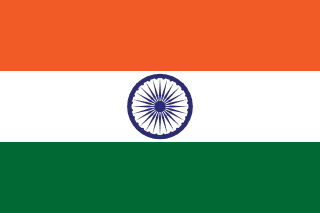
 33 Facts About India Most People Get Wrong
India is home to 1.43B people across 3,287,263 km², making it more densely populated than most of its neighbours. It ranks 1st in the world for Population.
Below are 33 facts about India, covering history, geography, economy and culture, including several that regularly surprise people who think they already know the country.
33 Facts About India
A complete overview of India's history, geography, economy and culture, covering everything from population and borders to language, climate and travel.
India is the world's largest democracy, with more than 1.4 billion people.
In 2023 India overtook China to become the world's most populous country.
India is the birthplace of four major world religions: Hinduism, Buddhism, Jainism and Sikhism.
The decimal place-value system and the concept of zero, fundamental to modern mathematics, were developed in ancient India; Brahmagupta set out rules for zero around 628 AD.
Chess evolved from the ancient Indian game of chaturanga, played around the 6th century AD.
India has 22 official languages and more than 120 major languages, with over 1,600 mother tongues spoken across the country.
India has the most vegetarians of any country, an estimated 400 million people.
Varanasi, on the river Ganges, is one of the oldest continuously inhabited cities in the world.
The Kumbh Mela is the largest peaceful gathering of people on Earth, drawing tens of millions of pilgrims, and the crowds are visible from space.
India is home to around 75% of the world's wild tigers, its national animal.
In 2014 India's Mangalyaan made it the first nation to reach Mars orbit on its first attempt, and one of the cheapest interplanetary missions ever flown.
In 2023 India's Chandrayaan-3 became the first mission to land near the Moon's south pole.
India is the world's largest producer of milk and one of the largest producers of spices, tea and bananas.
The Indian film industry, often called Bollywood, produces more feature films each year than any other country.
Mawsynram and Cherrapunji in the northeastern state of Meghalaya are among the wettest places on Earth.
In Meghalaya, communities grow living bridges by training the roots of rubber fig trees across rivers over many years.
The Taj Mahal in Agra, a marble mausoleum built by the Mughal emperor Shah Jahan, is one of the New Seven Wonders of the World.
Indian Railways is one of the world's largest employers, with well over a million staff.
Yoga and the traditional medical system of Ayurveda both originated in ancient India.
The Indus Valley Civilisation, which flourished in the region over 4,000 years ago, was one of the world's earliest urban cultures.
The word 'shampoo' comes from the Hindi word 'champo', meaning to massage.
India never adopted a single national language, reflecting a diversity captured on its banknotes, which show their value in 17 languages.
India is located in South Asia, Asia, with its capital city in New Delhi.
The population of India is approximately 1.43B, spread across 3,287,263 km² of territory.
India has a population density of 435/km²: one of the more densely populated countries in the region.
India has a coastline of 7,517 km, giving it access to maritime trade, fishing and coastal tourism.
India shares land borders with 6 countries: Pakistan, China, Nepal, Bhutan, Bangladesh, Myanmar.
The official languages of India are Hindi / English + 21 official, making it straightforward for international visitors to communicate.
India uses the Rupee (₹) as its official currency.
India gained independence in 1947, establishing itself as a sovereign nation in South Asia.
The total GDP of India is $3.73T, with a GDP per capita of $2,610, classifying it as a developing economy.
India has a highly varied, tropical south, arid northwest, alpine north climate, with the best time to visit being October–March.
India is considered a Budget destination for travellers, with meals averaging $1–5.
India invented zero, the decimal system, chess, shampoo, and Yoga. It has the world's largest postal network with 155,000+ post offices, including a floating post office on Dal Lake in Kashmir.
🏆 India World Rankings
India holds several notable world rankings; here is how it compares globally:
Famous Places in India
India is home to several remarkable landmarks and destinations that draw visitors from around the world:
🕌 Taj Mahal
A 17th-century marble mausoleum in Agra, among the world's most recognised buildings
🛕 Varanasi Ghats
The world's oldest continuously inhabited city, where sacred rituals meet the holy Ganges
🏯 Jaipur Pink City
The walled old city painted rose-pink in honor of a royal visit in 1876
🌴 Kerala Backwaters
A languid network of lagoons and lakes parallel to the Arabian Sea coast
Frequently Asked Questions About India
What is India famous for?
India invented zero, the decimal system, chess, shampoo, and Yoga. It has the world's largest postal network with 155,000+ post offices, including a floating post office on Dal Lake in Kashmir.
What is the capital of India?
The capital of India is New Delhi.
What is the population of India?
The population estimate for India is approximately 1.43B.
What language do they speak in India?
The official languages of India are Hindi / English + 21 official.
When did India become an independent country?
India gained independence in 1947.
What currency does India use?
India uses the Rupee (₹).
What is the GDP of India?
India has a GDP of $3.73T, with a GDP per capita of $2,610.
Where is India located?
India is located in South Asia, Asia.
Is India safe to visit?
Safety conditions in India vary by region. Always check your government's official travel advisory before visiting.
What are some fun facts about India?
India is the world's largest democracy, with more than 1.4 billion people. In 2023 India overtook China to become the world's most populous country. India is the birthplace of four major world religions: Hinduism, Buddhism, Jainism and Sikhism.
What are some interesting facts about India?
In 2023 India overtook China to become the world's most populous country. India is the birthplace of four major world religions: Hinduism, Buddhism, Jainism and Sikhism. The decimal place-value system and the concept of zero, fundamental to modern mathematics, were developed in ancient India; Brahmagupta set out rules for zero around 628 AD.
India facts: what should I know?
India is a country in South Asia with a population of 1.43B. Its capital is New Delhi and its official language is Hindi / English + 21 official. India is the world's largest democracy, with more than 1.4 billion people.
Explore More About India
Want to explore another country? Generate a random country and discover somewhere new.